
Binoculars for Travel: The Compact That Actually Comes Out of the Bag
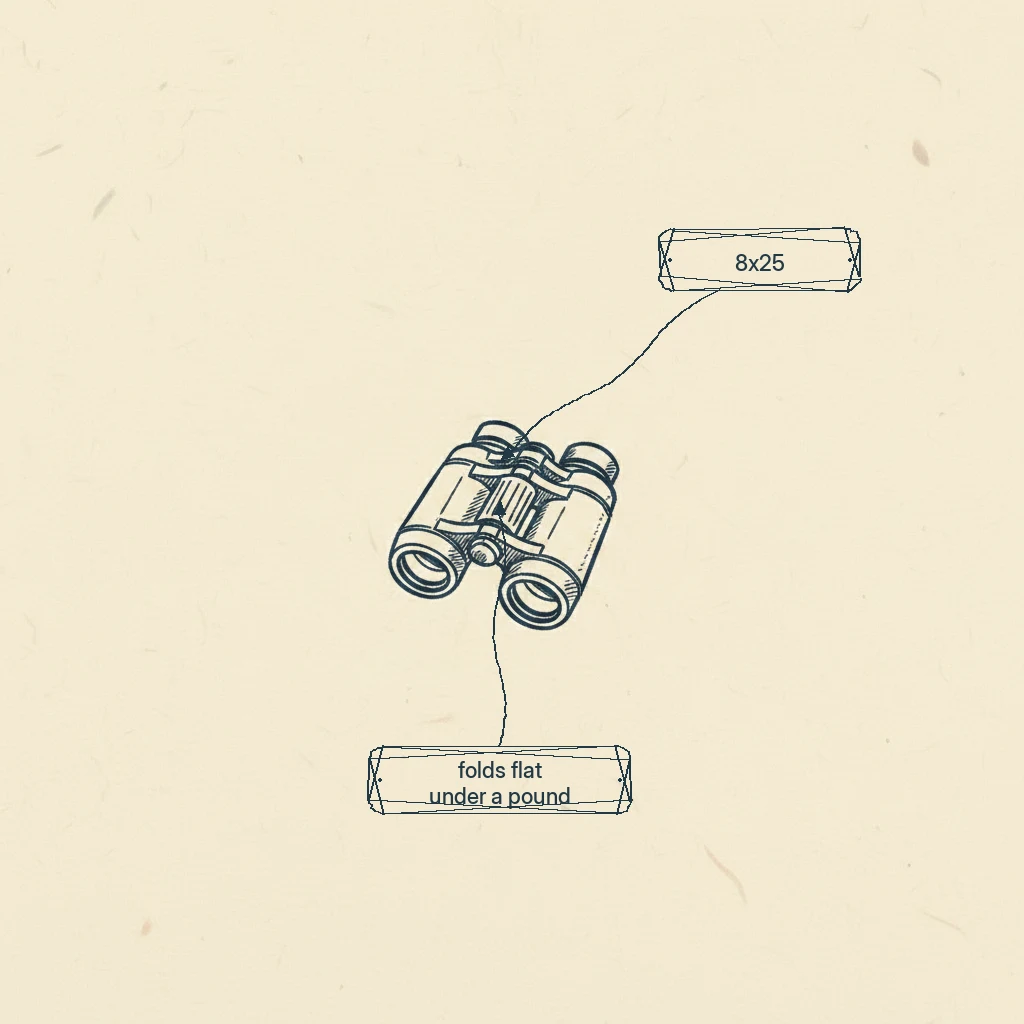
For travel, buy a compact roof-prism binocular: 8x with a 25 to 32mm lens, folding, under about a pound, like the Celestron Outland X 8x25 at about $70. Small enough that it actually leaves the suitcase.
 Ray Ostrander · Updated July 24, 2026 · how I decide
If you buy through a link here, the site earns a little. It's never why anything gets picked.
The best travel binocular is the one you’ll actually carry. So buy a compact roof-prism pair: 8x with a 25 to 32mm lens, folding, under about a pound, like the Celestron Outland X 8x25 at about $70. It’s small enough to leave the suitcase and ride in a jacket pocket. The tradeoff is an honest one, a slightly dimmer and narrower view than a full-size pair, and for most trips it’s worth every bit.
This is the most fun page in the whole corridor, because a good travel pair turns a scenic overlook into a moment you actually remember. Let me help you pick one that earns its spot in the bag.
What's on this page
Why compact wins for travel
Travel binoculars run on the same rule that governs telescopes. The gear you’ll carry beats the gear with better glass, because friction is what keeps binoculars in the bag. A big, bright full-size pair is wonderful on your porch and a burden on your shoulder by mile three of a walking tour. The compact you barely notice is the one that comes out when the whales surface or the valley opens up.
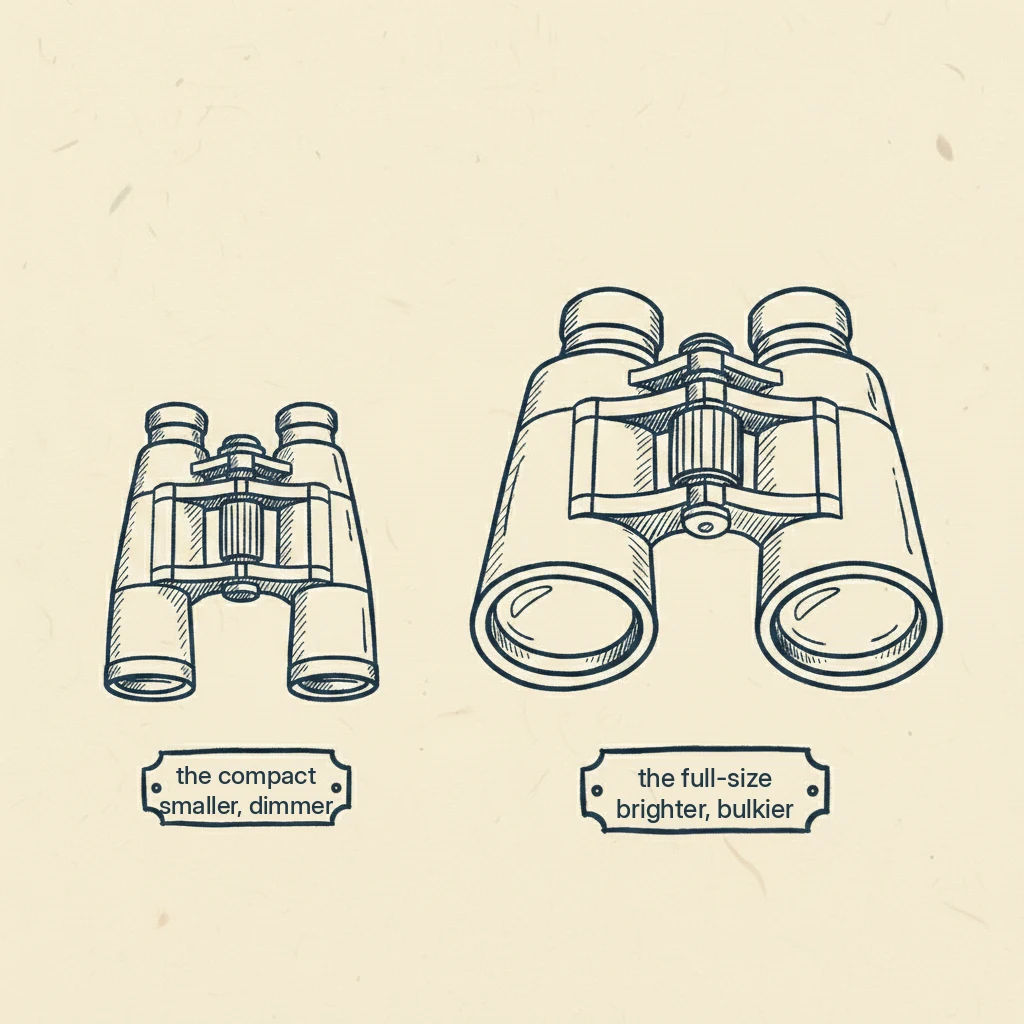
“Compact” has a real meaning worth knowing. It’s a binocular with front lenses between about 20 and 32mm, weighing under a pound and a half, and the genuinely pocketable ones come in under about 12 to 16 ounces. They usually use what’s called a roof prism, which is just the straight-barrel design that folds down small, as opposed to the bulkier zig-zag shape. Folding hinges and a 25 to 32mm lens are what shrink the package while keeping a usable daytime image.
The one honest tradeoff
I’d rather you hear this now than feel let down at dusk. A compact 25mm pair gathers less light and shows a narrower slice of the scene than a full-size 42mm. In bright daylight you’ll barely notice. At dawn on a game drive, or in the last light of an evening, the small pair goes dim sooner, and the full-size pair pulls ahead.
So the trade is real, and it’s a choice, not a defect. If your travel is scenic overlooks, city sightseeing, and the occasional wildlife glimpse in good light, the compact is the right call and you’ll love how it disappears in a pocket. If your trip is built around dawn-and-dusk wildlife, that’s where I’d tell you to carry a little more glass, which brings us to the shelf.
The travel shelf, cheapest first
All researched, none tested by anyone here, and you’ll find that said plainly on the About page. Prices are rounded to what I’m seeing as I write this.
- occer 12x25, about $36. A wildly popular budget folding compact. The one caution: at 12x it shakes more in the hand and gives a narrower field, so it’s better for a steady scenic glance than for studying detail.
- Bushnell H2O 8x25, about $55. A compact that’s fully waterproof, fog-proof, and rubber-armored, which is a smart pick for a trip that might get wet.
- Celestron Outland X 8x25, about $70. The 8x compact right at the travel sweet spot: steady, light, and pocketable. For most travelers, this is the one.
- Celestron TrailSeeker 10x32, about $190. A step up with a bit more reach and brighter glass, still packable.
- Celestron TrailSeeker ED 8x32, about $360. The premium compact, where the “ED” glass sharpens color and edges noticeably.
If you travel often and want the best small glass made, the pocket compacts from Zeiss and Swarovski are the top of this class. Lovely, and honestly overkill for a once-a-year scenic trip. Match the spend to how often the pair will actually travel with you.
When to skip the compact
One honest exception. For a serious wildlife trip, a safari or a dedicated birding vacation where you’re glassing distant animals in low light, packability should yield to brightness. There I’d step up to a mid-size 8x32 or 8x42, the kind of pair the cruise and safari page covers. It’s a little more to carry, and the brighter, wider view is worth it when the animals are far and the light is thin. For everything else, small wins.
Questions people actually ask
What size binoculars are best for travel?
A compact 8x with a 25 to 32mm lens, folding, under about a pound. That size packs small enough to actually carry, holds steady in the hand at 8x, and stays bright enough for daytime sightseeing. Go smaller than 25mm only if pocket size is everything, and accept a dimmer view in low light as the cost.
Are compact binoculars good enough, or should I get full-size?
For most travel, compact is the smart choice, because the pair you carry beats the pair you leave behind. Full-size 42mm binoculars are brighter and wider, which matters at dawn and dusk and for distant wildlife. If that’s your trip, carry the bigger glass. If it’s scenic and casual, the compact wins on sheer convenience.
What magnification should travel binoculars be?
8x is the travel sweet spot. It’s powerful enough to pull in a viewpoint or an animal, and steady enough to hold without the image dancing. Higher powers like 10x or 12x add reach but shake more in the hand and narrow your field, so you lose the scene while chasing the detail. For a do-it-all trip pair, stick with 8x.
What I’d pack
An 8x25 compact, around $70, folded into a jacket pocket where I’ll actually reach for it. If the trip is wet, the waterproof Bushnell at about $55. If it’s a real wildlife trip with dawn game drives, a brighter 8x32 instead, and I carry the extra ounces gladly.
A few things you’re probably also wondering:
- Planning a cruise and want one do-it-all pair? See best binoculars for alaska cruise.
- Whale watching on the trip? See binoculars for whale watching.
- Wear glasses while you travel? See binoculars for glasses wearers.
Ray Ostrander
Ray spent three decades explaining the sky to twelve-year-olds and their parents, and every January, hearing which Christmas telescopes ended up in the closet. He doesn't own a wall of gear and won't pretend to. He reads everything, tells you what owners agree on, and flags what's just his judgment. His goal is simple: no more January closets.