
Best Telescope for Adults: The One You'll Actually Carry Outside
The adult answer really is more aperture. For most people that is a 130mm to 150mm reflector, the best value there is. Go bigger only if you will actually carry it outside.
 Ray Ostrander · Updated July 24, 2026 · how I decide
If you buy through a link here, the site earns a little. It's never why anything gets picked.
Buying for yourself, with real money, and tired of guides that talk to you like a kid? Good. The honest adult answer is more aperture, which is just the width of the opening that gathers light. For most people that lands at 130mm to 150mm, roughly a six-inch reflector, which serious observers widely call the best value there is. Go bigger only if you’ll actually carry it outside. The biggest scope you leave in the garage loses to the medium one by the door.
That last sentence is the whole reason this page is different from the others you have read. Stay for it.
I taught middle-school earth science for thirty-one years, and I have never owned a wall of gear. What I own is three decades of explaining this to people, and the habit of reading everything before I answer. On this page especially that matters, because I’m going to point you at instruments I don’t own and couldn’t afford on a teacher’s salary. So I’ll do the only honest thing: tell you what owners agree on, tell you where they argue, and flag the parts that are just my judgment.
What's on this page
- You searched "high powered," and I want to answer that honestly
- This isn't the kids' page, and the shelf agrees
- The one right answer, and this time it's right for you
- The thing that actually ends an adult's hobby
- What you'll actually see, said before you spend
- Where owners genuinely disagree
- The trap that only catches the researcher
- A plain ladder, in adult terms
- Questions people actually ask
- What I'd tell a grown man who's been thinking about this for two years
You searched “high powered,” and I want to answer that honestly
A lot of adults type exactly that. High powered. It’s the sensible-sounding word, and the box aisle trained you to want it. So let me answer the word you used, not the word the hobby wishes you had used.
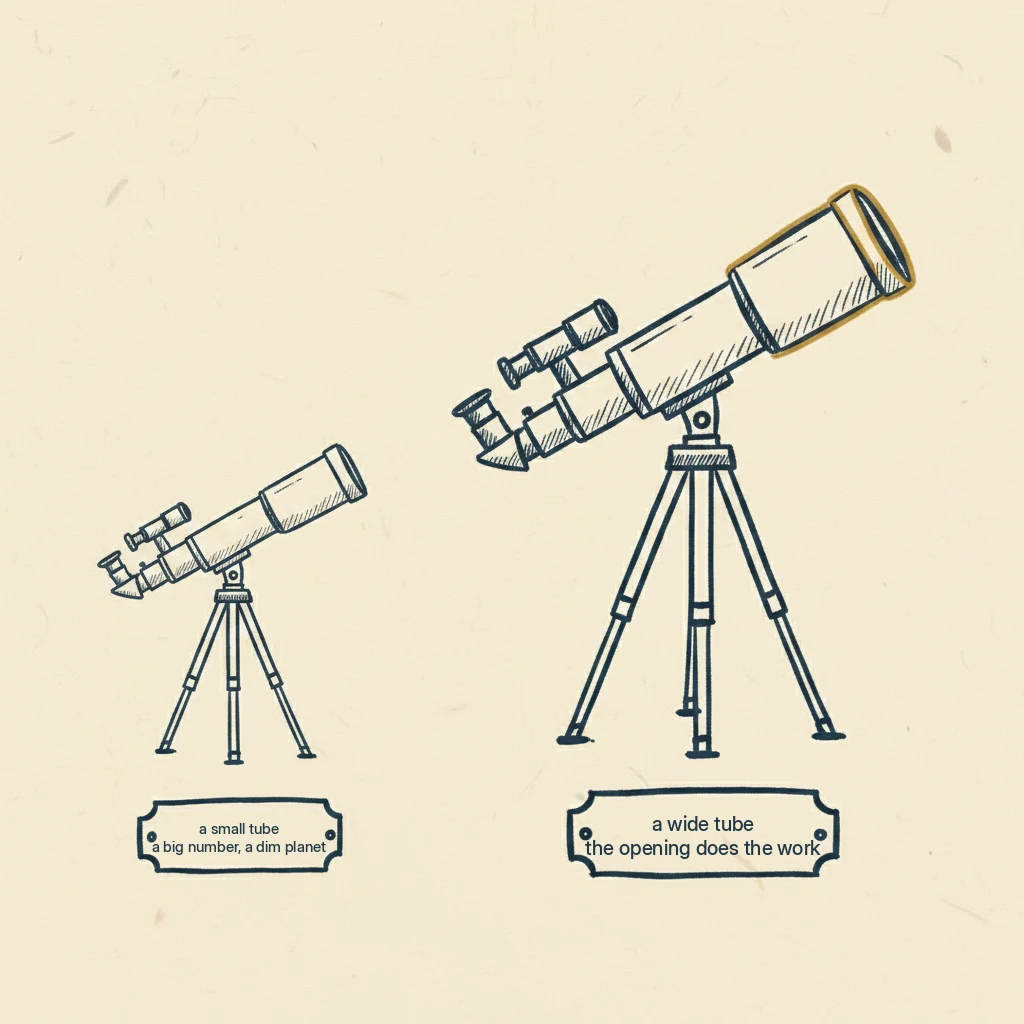
Here’s the straight version. Power, the magnification number, isn’t where the good view comes from. There’s a hard ceiling on useful magnification, and the width of the opening sets it, not the dial. Push past that ceiling and the image only gets dimmer and softer, because the same gathered light is spread too thin. So the thing that makes a telescope genuinely “high powered” in any way that matters is that opening. A big opening at modest magnification beats a small opening screaming a big number, every single time. You weren’t wrong to want power. You were just handed the wrong dial to turn.
This isn’t the kids’ page, and the shelf agrees
There’s a real difference between buying a telescope for yourself and buying one for a nine-year-old, and it isn’t snobbery. The honest version is plain: adults usually care less about boxed accessories and more about repeatable observing quality. Owners agree that adults want a steady mount, predictable behavior, aperture that shows real detail, and room to add better eyepieces later. The gift-shelf scopes, the ones with tripods that vibrate for several seconds after each touch and overstated magnification claims, are solving a different problem.
So if you’re actually here to buy a Christmas gift for a kid, that’s a genuinely different question, and I wrote it up separately in best telescope for beginners. This page is for the grown-up buying for the grown-up.
The one right answer, and this time it’s right for you
Read enough serious guides and the same instrument keeps coming up: an 8-inch Dobsonian. The reason observers give is simple, a Dobsonian offers more aperture per dollar than any other common telescope design. It’s the most-recommended scope in the hobby, for exactly that reason. The adult tiers back it up: 70mm to 102mm is the apartment and convenience choice, 130mm to 150mm is the best value for most adults, and 200mm and up is where serious visual observers live.
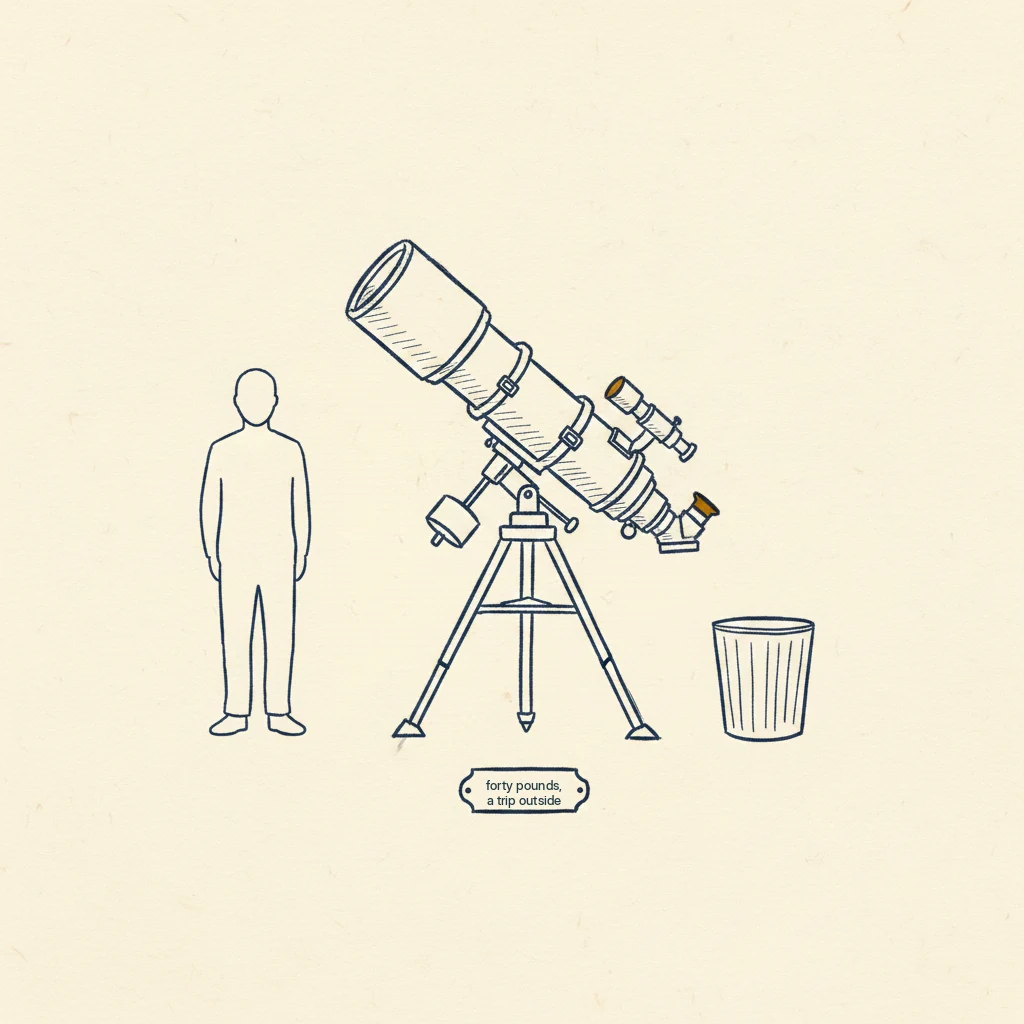
Now, on the kids’ page I call that same 8-inch scope the wrong first Christmas gift, and I stand by it. The difference is you. An 8-inch Dobsonian is a $700 instrument the size of a kitchen trash can that weighs about forty pounds. That’s too much telescope for a spark that showed up under a tree last week. It’s exactly the right amount of telescope for an adult who knows he is in. My judgment, said plainly: for the self-buyer, the hobby’s one right answer really is the right answer.
The thing that actually ends an adult’s hobby
Here’s the finding that no ranked list on this shelf will tell you, because every one of them makes money selling you up. For an adult, the hobby-killer is almost never junk optics. It’s friction.
The owner evidence isn’t subtle. One owner of a premium EQ6R PRO mount, which costs more than most of the scopes on this page, saw it called a hobby killer and came around to agreeing, because he couldn’t see Polaris from his yard, couldn’t figure out how to park the mount, and was about ready to pack it in. Another owner says flatly that portability is what kills the hobby for most people. A third names the “what’s best” research spiral itself as a hobby killer. And a veteran writer warns that a cheap computerized “go-to” scope buys you a whole night fiddling with electronics instead of looking at the sky.
Read those together and a rule falls out, the one from my own ledger: the telescope you’ll carry outside beats the telescope with better optics, because friction kills more astronomy than clouds do. The shelf says buy more aperture. The owners say buy the aperture you’ll actually take out the back door. Both are true. Only one of them is printed on the box.
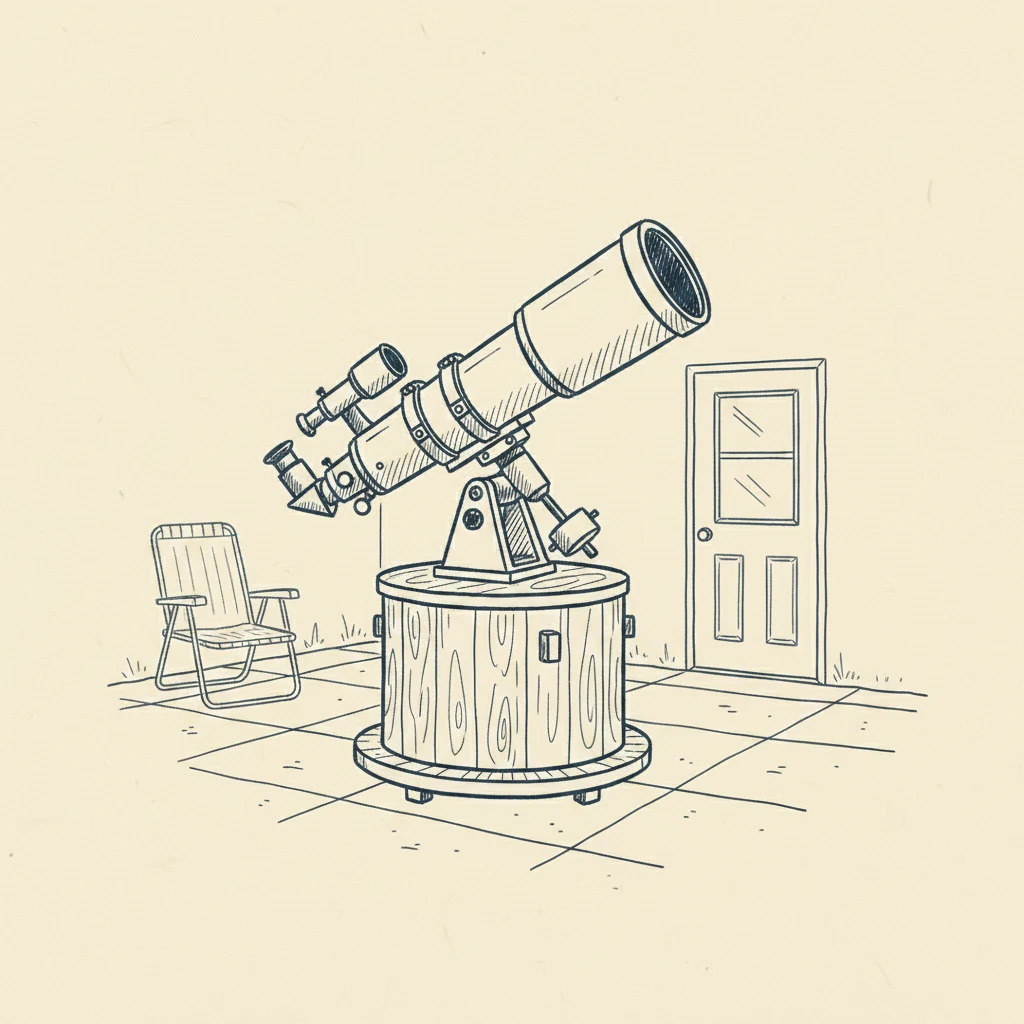
So before you buy the biggest thing you can afford, ask the unglamorous question. Where does it live, how many trips does it take to set up, and will you still do that in January when it’s twenty degrees out. A six-inch you set up in ninety seconds will show you more sky over a year than a ten-inch that lives in the closet.
What you’ll actually see, said before you spend
You’re spending real money, so you deserve the honest version. Your eyes aren’t cameras. Those glowing galaxy photos are long exposures stacked and processed. To the eye, stars stay pinpoints and the faint deep-sky objects show up as small white smudges. The serious observers say it kindly, and I keep the honest version on the deep-space page: much dimmer and without color, nothing like the poster.
The moon and the planets, though, are the real thing and they’re plenty. The moon is craters and shadow and a torn bright edge. Saturn is a small hard oval with rings you can genuinely see are separate from the ball. And you don’t need a dark-sky site for that part. Even from a bright city apartment, the moon and planets come through fine, even the far ones. The faint galaxies are what need the drive out to the dark. That’s where best telescope for deep space picks up, because dark skies, not a bigger scope, are the real unlock there.
Where owners genuinely disagree
I told you I’d flag the arguments, and here’s a live one. A respected writer says an equatorial mount, the kind that tilts on an angle to track the sky, is a poor choice and a simple Dobsonian base is the fix. Experienced owners push back hard. One taught a new owner to run that same “bad” mount and the buyer ended up perfectly happy with it, and argues the frustration is usually inexperience, not the gear.
Here’s where being an adult changes the math. An eight-year-old on Christmas morning can’t learn a fussy mount, so for the gift register I side with simple. You can learn one. If tracking the sky on an equatorial mount sounds like a satisfying puzzle rather than a chore, the dissenters are talking to you. If you just want to point and look, the Dobsonian base is still the shortest path to being outside tonight.
The trap that only catches the researcher
You have an adult-specific hazard the gift buyers do not. You research. And a lot of the older, well-ranked articles you’re reading recommend brands that no longer exist. Orion, a name you’ll see all over 2019-era guides, ceased operations in 2024 when its parent company shut its doors. Meade is gone too. If an article sends you shopping for one of those, the article is out of date, and probably its prices are as well. Cross-check the year on anything you read, including the model names.
A plain ladder, in adult terms
Prices below are manufacturer figures I pulled on the dates noted. The tier framework I’m borrowing lists no prices at all, so treat these as the maker’s number, not a quote, and expect street prices to drift.
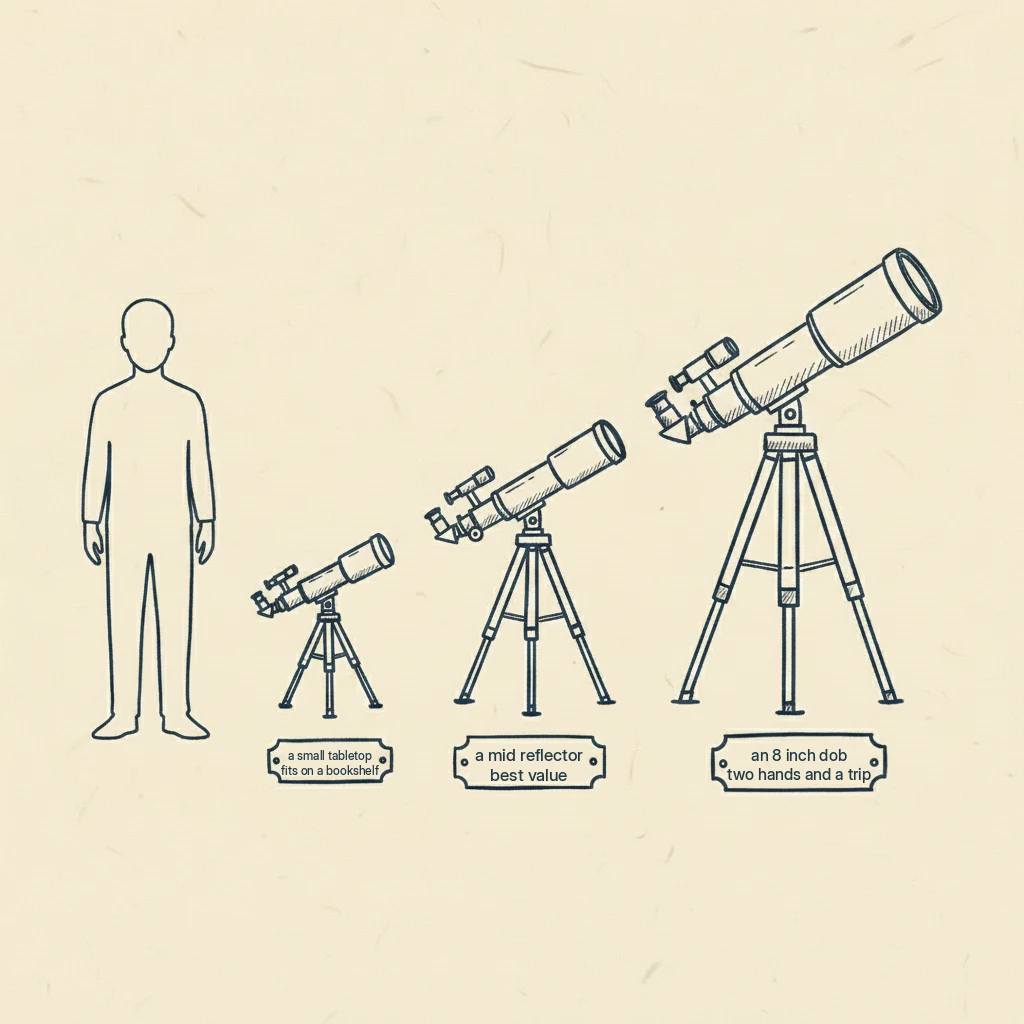
| where you are | the honest pick | rough price as I write this | tier words |
|---|---|---|---|
| apartment, convenience first, grab and go | Celestron AstroMaster 70AZ | about $150 to $200 | 70 to 102mm “convenience-first” |
| best value for most adults | 6-inch reflector, e.g. Sky-Watcher Heritage 150 | about $355 | 130 to 150mm “best value for most adults” |
| you know you’re in | 8-inch Dobsonian, e.g. Sky-Watcher Classic 200P | about $725 | 200mm+ “serious visual observers” |
| you want it to find things for you | Celestron NexStar computerized, 4SE to 8SE | about $650 to $1,500 | go-to convenience, with the fiddle tax |
That $725 eight-inch costs about what a weekend away does, and it will still be working in twenty years. The computerized scopes buy you convenience and charge you a learning curve for it. Neither is wrong. Just know which tax you’re paying.
If you find yourself leaning smaller and simpler, the honest cheaper cousin is a good pair of 10x50 binoculars plus a drive to a dark sky, and I lay that out in best binoculars for stargazing. Say the word and you’re there. But you came for a telescope, so let’s not talk you out of one.
Questions people actually ask
What’s the best telescope for adults?
For most self-buyers, a 130mm to 150mm reflector, which reviewers call the best value in the category. If you know you’re committed, an 8-inch Dobsonian is the hobby’s genuine one right answer. If you live in an apartment or want grab-and-go, a good 100mm class scope isn’t a compromise, it’s a sensible fit. The best one is the one you’ll carry outside.
Do I want a “high powered” telescope?
You want a wide opening, not a big magnification number. Useful power tops out at about fifty times the aperture in inches, and anything past that just dims the view. A 6-inch scope at sensible power will always beat a small tube advertising “600x.” Buy the aperture. The power follows.
Is an 8-inch Dobsonian too much for a first telescope?
For an adult who knows he is in, no, it’s the right answer. For a gift or a maybe-interested kid, yes, it’s forty pounds and $700 of commitment before you know the interest is real. The scope is the same. The buyer is what changes. If you’re on the fence, start at the 6-inch and never regret it.
Can I use a telescope from an apartment or a bright city?
For the moon and planets, yes, fully. Owners in bright neighborhoods see Jupiter’s moons and Saturn’s rings just fine, and even the far planets show up. Light pollution steals the faint galaxies, not the bright targets. City observers just do their deep-sky viewing on a drive out to the dark, and there’s no shame in that.
Should I get a computerized go-to telescope?
If pointing the scope yourself sounds like a chore, a go-to can be worth it. If it sounds like part of the fun, skip it and save the money for aperture. The honest warning from owners: a cheap go-to can eat a clear night in setup and alignment. Buy a good one or buy none.
What I’d tell a grown man who’s been thinking about this for two years
Here’s the plain version, one recommendation, no hedging. Buy the biggest scope you’ll genuinely carry outside, which for most people is a 6-inch reflector, and if you already know you’re all in, make it the 8-inch Dobsonian and stop reading listicles tonight. Then take it out on the first clear evening and find the moon, before you optimize one more spec.
Because when you finally hold Saturn steady in the eyepiece, that faint light left the planet more than an hour before it reached your eye, and it traveled the whole way to end its trip with you. If you’re the kid who once got a wobbly scope that never worked, this is the night that pays that back.
The shortlist lives at best telescope. The full price picture is how much a telescope costs. Where your aperture question is really heading is best telescope for deep space. And if you feel yourself drifting toward photographing the sky rather than looking at it, that’s a different craft than mine, and I hand you off honestly at best telescope for astrophotography.
Ray Ostrander
Ray spent three decades explaining the sky to twelve-year-olds and their parents, and every January, hearing which Christmas telescopes ended up in the closet. He doesn't own a wall of gear and won't pretend to. He reads everything, tells you what owners agree on, and flags what's just his judgment. His goal is simple: no more January closets.