
Binoculars for Hunting: The Pair, and the Free Fix Nobody Sells
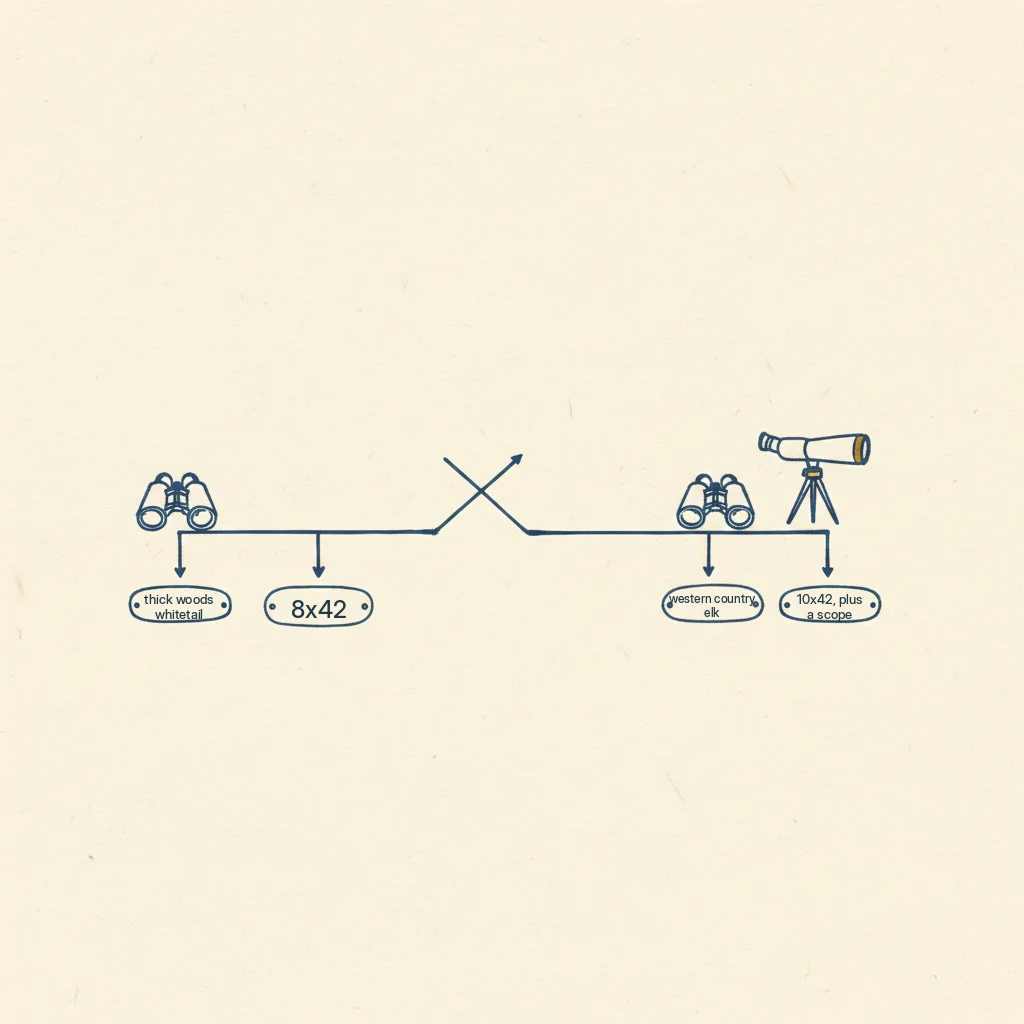
8x42 for whitetail, woods, and tree stands. 10x42 for western open country, usually with a spotting scope. The 8x42's bigger exit pupil is what you feel in the last light.
 Ray Ostrander · Updated July 24, 2026 · how I decide
If you buy through a link here, the site earns a little. It's never why anything gets picked.
For most hunting, take 8x42: whitetail, hardwoods, thick brush, tree stands, anywhere close to mid range. Take 10x42 if you hunt western open country, where hunters usually pack a spotting scope alongside it. The reason to lean 8x is light. The 8x42 puts a bigger circle of light into your eye, and that’s what you feel in the last minutes of legal shooting light, not at noon. And if 10x feels shaky, the fix is usually free, which I’ll get to.
That’s the answer. The rest lays out the why, and passes along what the hunters themselves say, because that part is theirs, not mine.
Let me be straight with you up front. I taught earth science for thirty-one years. I’m not a hunter, and I’m not going to talk like one. What I can honestly give you is two things: the physics of how these optics behave in low light and in shaky hands, and the words of hunters who actually do this. When a hunter said it, I’ll tell you it was the hunter. When it’s the physics, that part I can stand behind myself. Everything about the woods belongs to them.
What's on this page
8x42 or 10x42, by where you hunt
The whole shelf argues 8x versus 10x as if there were one winner. There’s not. There’s a rule and it keys off your terrain, and the hunters state it plainly.
For whitetail in the woods, the hunters lean 8x42. The safer whitetail choice for most hunters, they say, is the steadier, faster-to-acquire, better-in-low-light 8x, because whitetails use cover like a cheat code. A wider, lower-power view finds the animal slipping through the brush faster than a tight 10x ever will.
For western open country, elk and mule deer across big distances, the same hunters switch sides: out on the Colorado high country, 10x and even 12x start to make sense. And out there the binocular is rarely alone. Western hunters glass with 10x42 and then pull out a spotting scope for the close look, because in that country 8x leaves them wanting more. If that’s your hunt, the honest answer is two instruments, and I cover the second one at best spotting scope for the money.
If terrain doesn’t settle it, the cleanest tiebreaker the hunters offer is your method. Sit and watch over field edges, 10x42 makes sense. Move, scout, and slip in on public land, 8x42 fits better. You already know which one you are, without knowing a thing about optics.
The number with a deadline
This is the one piece of physics that matters most on this page, and it lives in that last stretch of the evening.
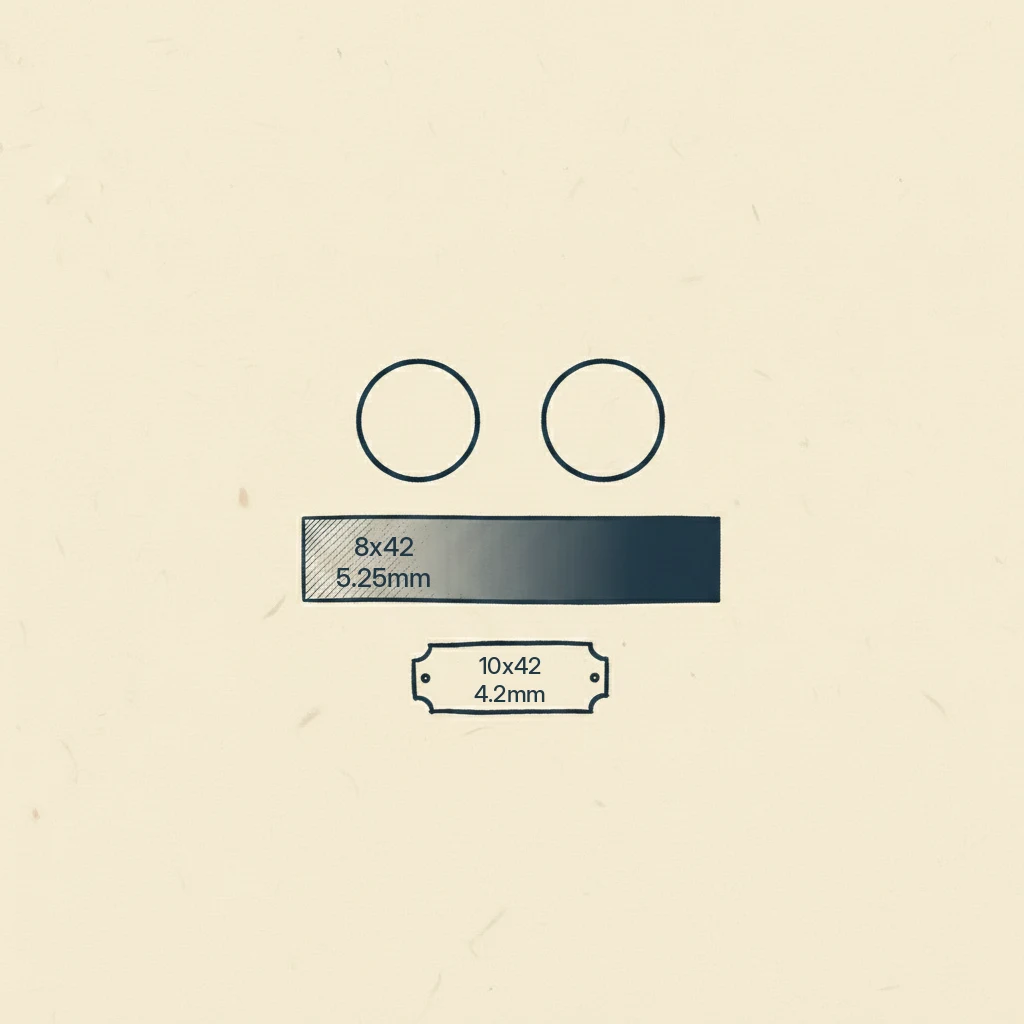
Every binocular hands your eye a small disc of light, and its width is simply the front lens over the magnification. Run the numbers and an 8x42 clears 5.25mm while a 10x42 sits at 4.2mm. In daylight your pupil is small and the gap never shows. But as the light fades your pupil opens wide and wants all it can get, so the bigger disc wins. That’s why the hunters keep saying the 8x looks brighter at dusk. It isn’t a better lens. It’s a wider straw.
The hunters tie it to a clock: that bigger circle is what matters in the last handful of minutes of legal light on a November evening. Now hear this clearly, because it’s important and it isn’t my rule to make. Legal shooting light is set by your state and your season, and it varies. I’m not telling you when you can shoot. I’m telling you that whenever your light runs out, the wider circle is what buys you the last clear look. Check your own regulations for the when. The physics is the same everywhere.
Before you spend more on glass, sit down
This is the part no product page will ever tell you, because there’s nothing to sell in it. A lot of what people blame on their binoculars is how they’re holding them.
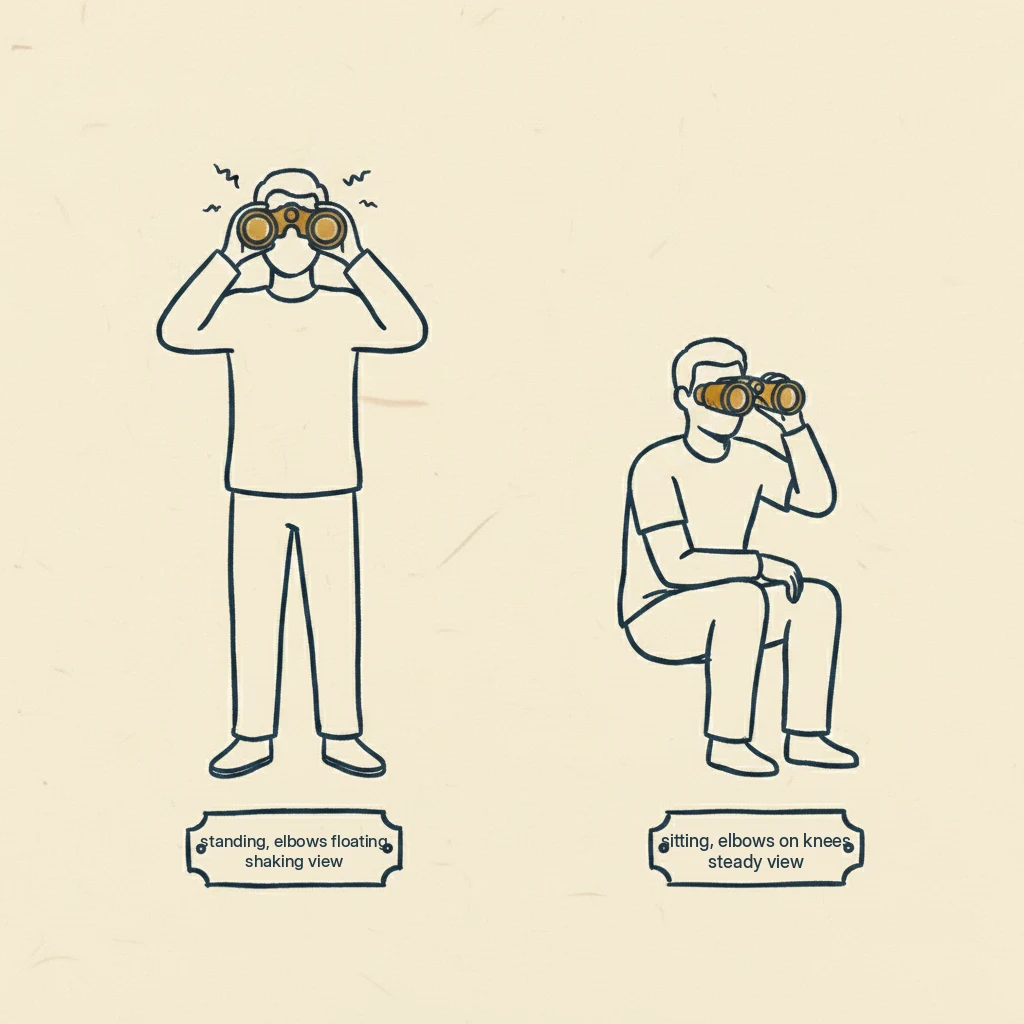
The hunters say it plainly, and they earned the right to: buy 10x42, then glass standing in a tree with your elbows floating, and you’ll hate it, and you’ll blame the binoculars when it was your technique. Their fix is free: sit, lock your elbows into your knees, and glass slow. The physics backs it exactly. Whatever shake is in your body, the magnification enlarges it right along with the image, so a 10x pair on floating elbows gives you a swimming, jittering mess. Brace those elbows and the same glass goes still.
So before you decide your binoculars are the problem and buy new ones, try the free fix first. Sit, plant your elbows, glass slowly. If a 10x is shaky in your hands, that may be the whole cure.
The cheapest thing that decides everything
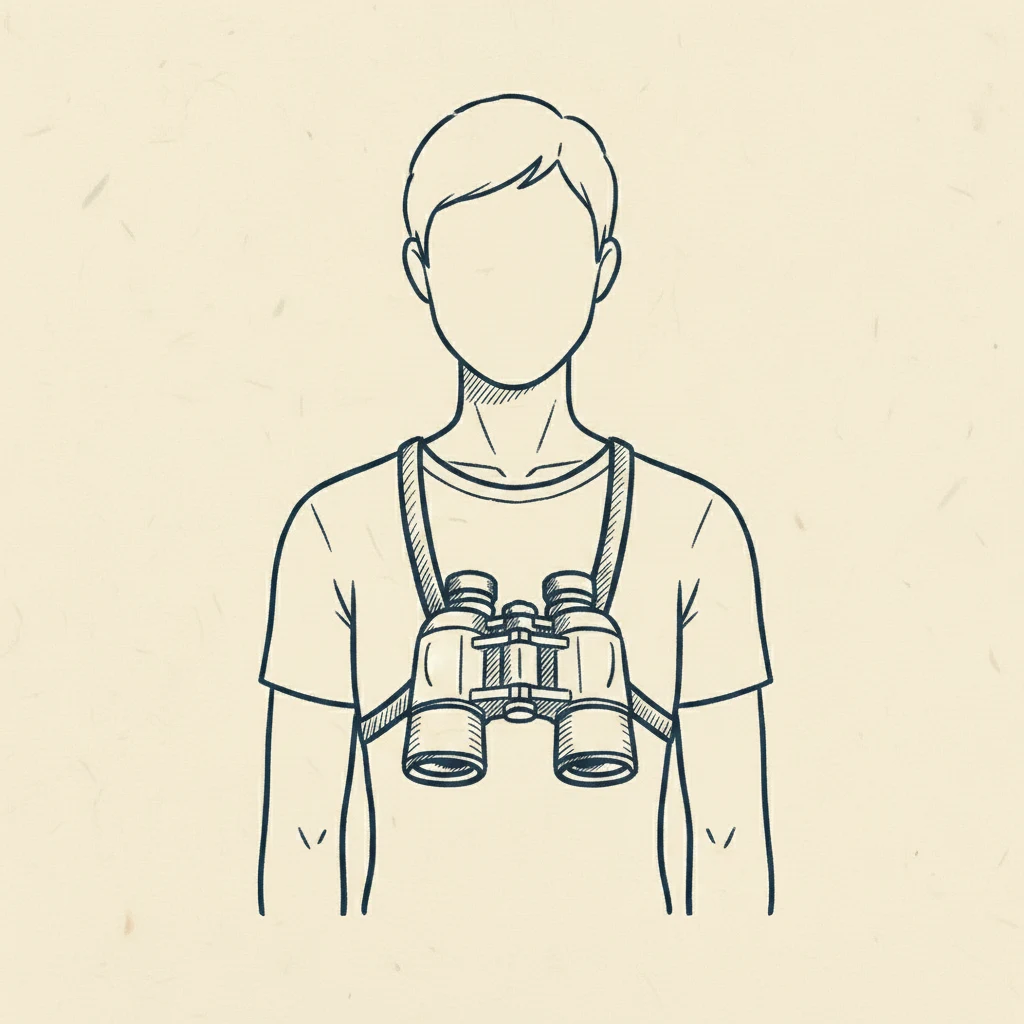
Here’s the other near-free item, and the hunters flagged it, not me. They carry a bino harness, something like an ALPS OutdoorZ at around $45, because it keeps the binoculars from swinging when you climb. Think about what that really does. A binocular that bangs and swings every time you move is a binocular you eventually leave in the truck, and a binocular in the truck sees nothing. A $45 harness against a $250 optic is the cheap thing that decides whether the expensive thing ever gets used.
That’s the pattern on this whole door. The two most common complaints, a shaky image and glass left behind, are both solved for under fifty dollars, by bracing your elbows and by carrying them where they don’t swing. That’s the honest center of this page, and it costs less than the binoculars do.
What to actually buy, at the $200 most people want
A lot of you’re searching for hunting binoculars under $200, and the good news is that the cheap answer and the right answer mostly agree here. The sub-$200 shelf is full of the 8x42s the hunters recommend for the most common hunt. Everything below is researched, and nobody here has looked through these.
| pair | rough price as I write this | note |
|---|---|---|
| Vortex Triumph HD 10x42 | about $98 | the floor for the 10x reach |
| Bushnell H2O Xtreme 10x42 | about $120 | budget 10x |
| Nikon PROSTAFF P3 8x42 | about $150 | the steadier 8x, well under the anchor |
| Celestron Nature DX 8x42 | about $160 street | wide, bright, good eye relief |
| Nikon Monarch M5 10x42 | about $297 | the top of the sensible range, above the anchor |
And here are two picks the hunters themselves favor, undated so treat them as rough: a Nikon Prostaff 7S 8x42 around $180, and a Vortex Diamondback HD 10x42 around $250 on the street. Notice both sit right at the $200 neighborhood the searches ask for. This is one of the few doors where the sensible money and the expert pick land in the same place.
Where people go wrong
The biggest mistake is the one above: buying more magnification to fix a problem that bracing your elbows would fix for free, then blaming the glass.
The second is reaching past 10x for “reach.” Every step up in power magnifies your shake and shrinks that circle of light right when you need it most, in the last minutes of the evening. If long distance is genuinely your problem, the full math on magnification lives at binoculars for long distance, and the real fix out west is a spotting scope, not a bigger binocular.
The third is the pocket compact. A 10x25 folds up small and sounds perfect, but its light circle is only 2.5, the dimmest option there is, at exactly the hour deer move. Small is right for travel. It’s wrong for first and last light.
And one honest boundary. Some of you’re searching for night vision or thermal binoculars for hunting. A normal 42mm binocular doesn’t see in the dark, no matter what the objective is, and that’s a genuinely different kind of device with different truths. I keep that separate and honest at binoculars for night vision.
Questions people actually ask
Are 8x42 or 10x42 binoculars better for hunting?
It depends on your country. For whitetail in the woods and thick cover, hunters lean 8x42: steadier, wider, brighter in low light. For western open country and elk, 10x42, usually paired with a spotting scope. If you can’t decide, 8x42 is the more forgiving default, and it’s the harder pair to regret.
What are the best binoculars for deer hunting under $200?
The under-$200 shelf is mostly the 8x42s hunters like for deer. A Nikon PROSTAFF P3 8x42 runs about $150, a Celestron Nature DX 8x42 about $160, and a Vortex Triumph HD 10x42 about $98 if you want the reach. Any of those, plus a harness and steady technique, will out-hunt a pricier pair used badly.
Why do my hunting binoculars look shaky?
Usually it’s technique, not the binoculars. Higher magnification multiplies every tremor in your hands, and glassing while standing with your elbows floating makes it worse. Sit, lock your elbows into your knees, and glass slowly. Hunters say most of what people blame on their 10x is really their posture, and the physics agrees.
What magnification do I need for elk hunting?
For western elk in open country, 10x42 is the common choice, and many hunters add a spotting scope for the long look. The extra reach earns its keep across those distances. In closer or timbered country, 8x is often plenty. Match the power to how far you actually glass.
Do I need special low-light binoculars for hunting at dusk?
You need a big enough light circle, which is the front lens divided by the magnification. An 8x42 gives 5.25, brighter to your dark-opened eye than a 10x42’s 4.2. That’s why 8x42 is the classic dusk choice. Just remember your legal shooting light is set by your state, so check your own season’s rules for the timing.
What I’d tell you before the season
Here’s the plain version, one call. If you hunt whitetail and woods, buy 8x42. If you hunt western open country, buy 10x42 and plan on a spotting scope too. Spend somewhere around $100 to $200 and you’re well armed. Then put the harness on and, before you ever decide the glass is the problem, sit down and lock your elbows into your knees. The hunters say most of the shake and most of the missed light come from those two habits, not from the binoculars, and the fix costs almost nothing.
The value question across every use lives at best binoculars for the money. The reach math is at binoculars for long distance. The western hunter’s second instrument is best spotting scope for the money. If yours is a hunting safari abroad, the trip register is a little different and that’s best binoculars for safari. And the hub for every situation is best binoculars for an Alaska cruise.
Ray Ostrander
Ray spent three decades explaining the sky to twelve-year-olds and their parents, and every January, hearing which Christmas telescopes ended up in the closet. He doesn't own a wall of gear and won't pretend to. He reads everything, tells you what owners agree on, and flags what's just his judgment. His goal is simple: no more January closets.