
Monocular for Bird Watching: When It's the Right Call, and When It Isn't
An 8x monocular is cheap, pocketable, and one-handed, and a good one runs about $80. But for a dedicated birding trip, binoculars still win on depth and comfort. Here's how to tell which one you are.
 Ray Ostrander · Updated July 24, 2026 · how I decide
If you buy through a link here, the site earns a little. It's never why anything gets picked.
Get an 8x monocular, not a higher-power one. Something like the Nocs Zoom Tube 8x32 at about $80, or a Vortex Solo 8x36 at about $120. It’ll live in a jacket pocket, it costs less than binoculars, and you can work it one-handed. But if you’re heading out specifically to bird, binoculars win, and I’d rather tell you that now than sell you the thing this page is named after.
What's on this page
The honest part first
Most pages about monoculars are trying to hand you a monocular. Here’s the actual shape of it.
A monocular is half a binocular. One barrel, one eye. That’s not a slight, it’s just the design. What you gain: it drops in a pocket, it costs less than the equivalent binocular, and one hand runs it while the other holds a leash, a railing, a coffee, or a hiking pole. Owners put the weight at about half of what binoculars weigh.
What you give up is real. Two eyes give you binocular vision, the immersive effect that lets you perceive distance, and one eye flattens that. A bird in a tangle of branches is a puzzle of depth, and two eyes solve it faster than one.
The other thing nobody mentions until you’ve been at it twenty minutes: one eye gets tired. You’re squinting the other one shut, or trying not to, and it wears on you.
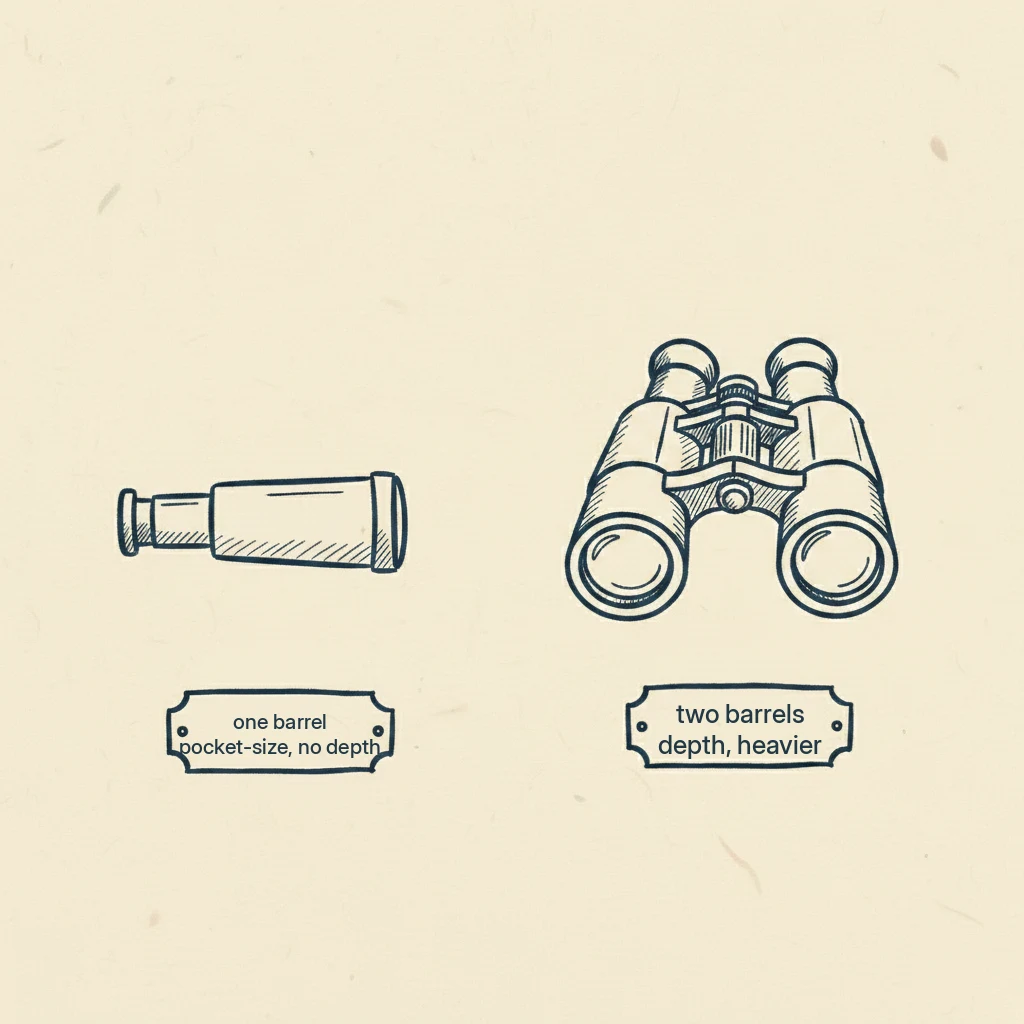
So who should actually buy one?
Four people, and if you’re not one of them, buy binoculars.
The person who won’t carry binoculars. This is the big one. A monocular in your coat pocket beats the good binoculars sitting at home on the shelf, every single time. If you know yourself and you know the bag stays in the car, buy the thing that stays on your body.
The one-handed situation. Dog walkers, kayakers, parents holding a small hand, anybody on a trail with a pole. One free hand is all a monocular asks for.
The tight budget. A monocular costs less than the equivalent binocular. If forty or eighty dollars is the difference between having something and having nothing, have something.
The birder with one working eye. This one deserves saying out loud, because I’ve seen it asked, hesitantly, by someone wondering whether birding was even for them. If you only have vision in one eye, a monocular isn’t a compromise. It’s the correct tool, and it costs half as much and weighs half as much as the pair of barrels you’d only be using half of. That’s my judgment, but I’ll stand on it. The one thing experienced folks will tell you, and it’s worth knowing going in, is that holding any optic steady one-handed gets harder as you get older, so give yourself something to brace against, and look for a focus knob on top where your fingers can reach it without regripping.
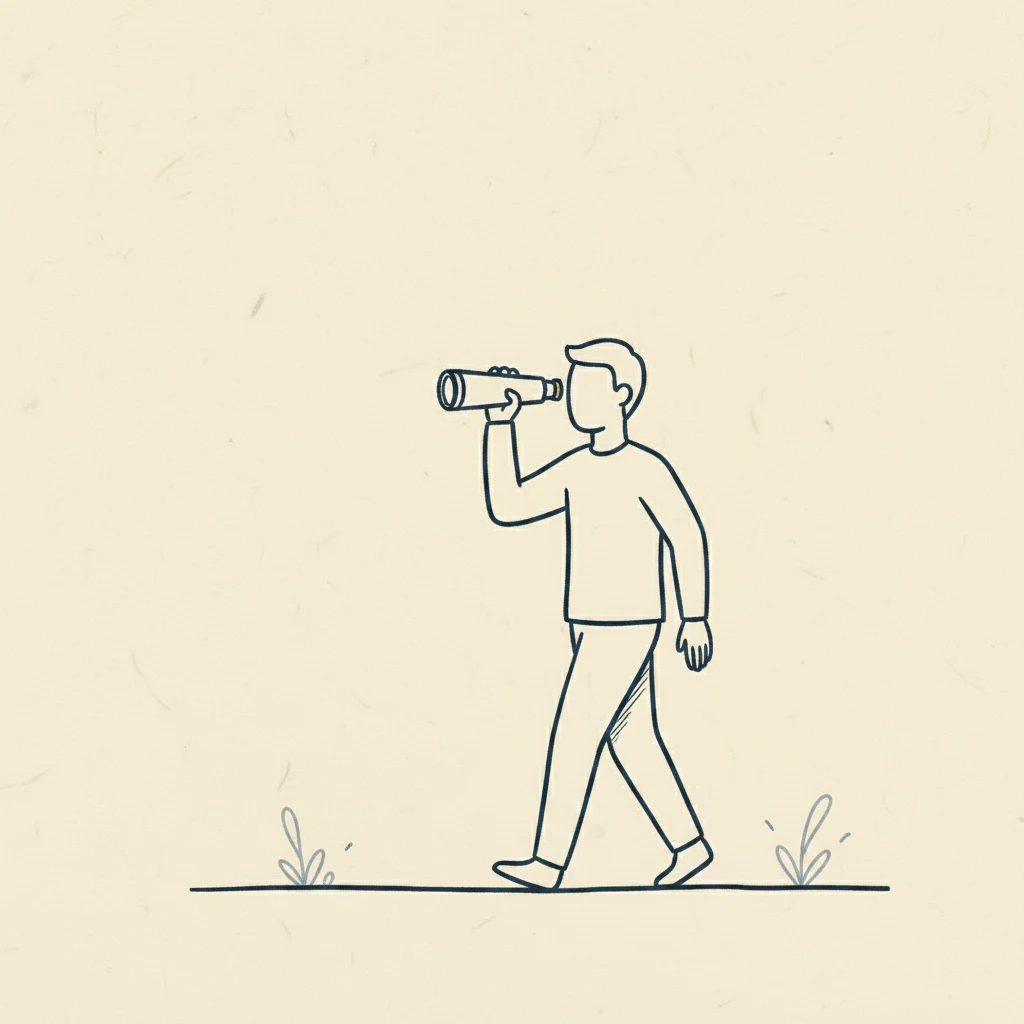
Why the biggest number is the wrong buy
The temptation is to buy the biggest number, because a monocular is small and cheap so why not get the 12x.
Two problems, and they compound.
First, steadiness. You’re holding a light little tube in ONE hand, and whatever tremor is in that hand gets scaled up by the power. High power in one hand is a jittery picture.
Second, and this is the one people don’t see coming: aiming. A high-power monocular has a narrow view, so finding the bird is like hunting for it through a straw. The bird is right there, in the tree, and you can’t get the tube pointed at it. By the time you do, it’s gone.
Audubon strongly recommends binoculars that magnify six, seven, or eight times, and warns that ten-power and up slash the field of view. On a one-handed monocular those reasons only sharpen: 8x gives a detailed view without demanding a rock-steady hand, and stays wide enough that you’re not hunting forever to find the bird. That last clause is the whole argument. In birding, finding it’s the job.
So: 8x. Not 10x, not 12x.
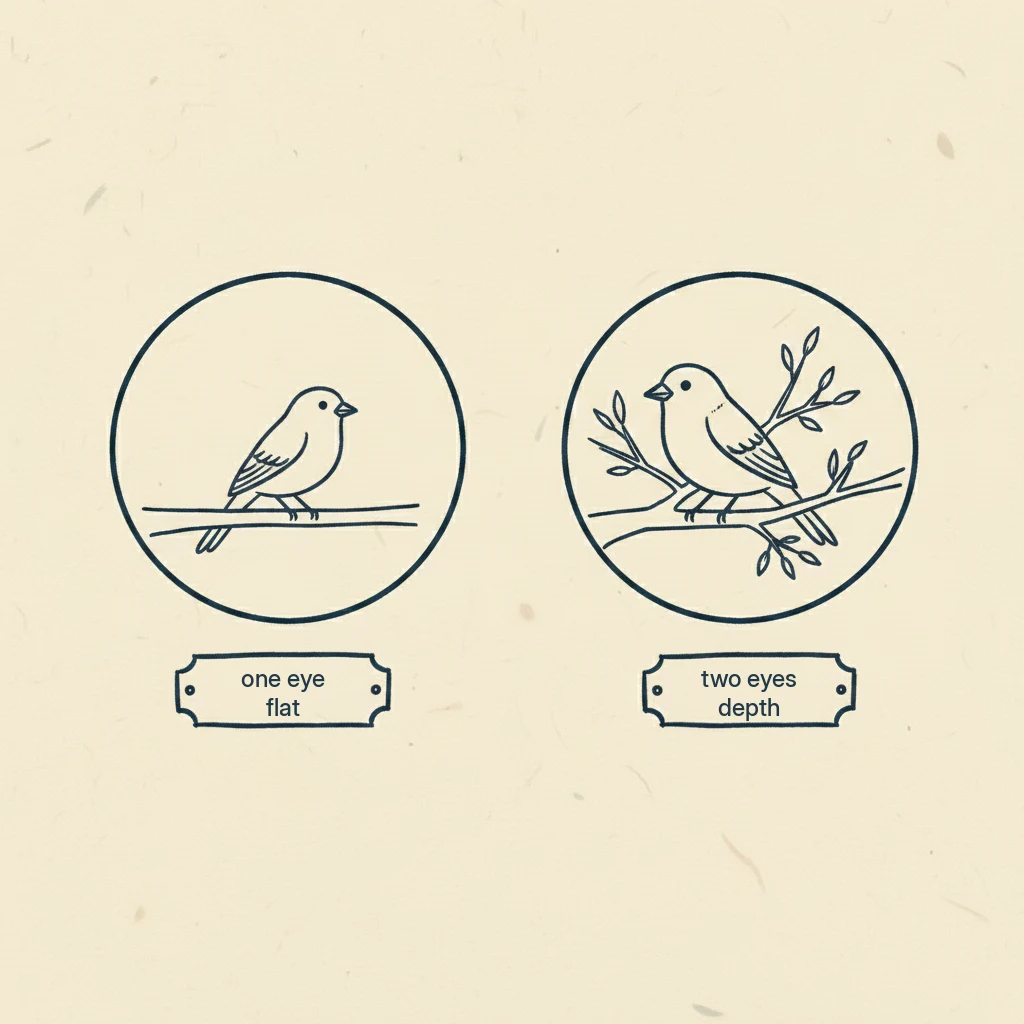
One more number worth knowing
You’ll see monoculars written like 10x25 or 8x32. The first number is the power, how much closer it brings the bird. The second is the front-lens width in millimeters, the part that gathers light.
Divide the second by the first and you get the exit pupil, which is just how wide the little beam of light is when it leaves the eyepiece and enters your eye. Wider beam, brighter picture.
Do that math on a 10x25 and you get 2.5mm, which is on the dim side. Do it on an 8x32 and you get 4mm. Same pocket, brighter view, easier to aim. That’s the quiet reason the 8x models keep winning this category.
The shelf
Two sets of prices here, and I want to be straight about which is which. The dated ones I’ve checked this month. The others come from a birding-optics guide with no date on it, so treat them as ballpark.
| model | what it’s for | about what it costs |
|---|---|---|
| Nocs Zoom Tube 8x32 | The pick: right power, bright, sub-$100 | about $80 (July 2026) |
| Vortex Solo 8x36 | Bigger front lens, brighter, still 8x | about $120 (July 2026) |
| Vortex Solo 8x25 | Smallest of the sensible ones | about $70 (July 2026) |
| Vortex Solo 10x25 | Popular, but the dim, twitchy end | about $79 (July 2026) |
| Bushnell 8x32 offtrail | The cheap one that works | around $40 (undated guide) |
| Zen-Ray ZRS HD | Called a real bargain | about $135 (undated guide) |
| Opticron BGA 8x42 | The one the birding writer prefers | around $200 (undated guide) |
The Vortex Solo is the one people recommend to each other most, and it carries a top rating with thousands of ratings behind it. It also carries an honest piece of dissent that I’m not going to hide: one owner reports breaking several of them, though the warranty covered the repairs every time. Take that for what it is, one voice, but a voice worth hearing before you spend.
If you take one thing from this table, take the 8x column. The 10x25 sells well, and it’s the shakier, dimmer choice for finding birds.
The traps
The big number. A high-power monocular is genuinely hard to aim and hard to hold. The 8x recommendation exists specifically to keep you out of this ditch.
Expecting binocular feel. It won’t feel like binoculars. It flattens depth and it tires one eye. That’s not a defect, it’s the trade. Know it going in and you’ll be satisfied. Discover it on the trail and you’ll be annoyed.
Buying the monocular when you wanted binoculars. If your plan is a real birding trip, out for hours, watching a wetland, this page’s product isn’t your product. Go get the binoculars.
Questions people actually ask
Is a monocular good enough for bird watching?
For casual, packable, one-handed watching, yes. For a dedicated birding outing, binoculars are better, because two eyes give you depth and don’t tire as fast. The honest framing: a monocular is the tool you’ll actually have with you, and binoculars are the tool you’d rather be holding once the bird lands.
What magnification monocular is best for birds?
8x. It stays steady enough in one hand and stays wide enough to find the bird without a long hunt. Higher power sounds better and aims worse.
Are monoculars cheaper than binoculars?
Yes, that’s one of the main reasons to buy one. A monocular costs less than the equivalent binocular, because it’s one barrel of optics instead of two. Good ones sit around $80 to $120.
Can I use a monocular if I wear glasses?
The same eye-relief rule applies as with binoculars: you need enough of it for your glasses to sit in, and you want the eyecup to fold or twist down. Check the eye-relief number in millimeters before you buy.
Do birders actually use monoculars?
Some do, for specific reasons: pocket size, one free hand, budget, or vision in one eye. Most serious birders use binoculars. Both of those things are true at once, and any page that tells you only the first one is selling you something.
What I’d tell a parent in the hallway
If you’ll actually carry it, buy the 8x monocular, spend about $80, and enjoy having the birds close.
If you’re planning the trip, packing a bag, and setting aside the morning, skip this page and buy binoculars. The monocular is the tool that’s with you. Binoculars are the tool you go birding with. Most people who ask me this question, once they hear it put that way, know which one they are.
While you’re figuring this out
You’re probably also wondering:
- What the binoculars answer looks like, since I keep pointing you there: best binoculars for an Alaska cruise
- Whether the same pocket logic holds on the water: binoculars for whale watching
- How eye relief works when you wear glasses, which applies to monoculars too: binoculars for glasses wearers
- Whether that same tube is any good pointed up after dark: stargazing for beginners
Ray Ostrander
Ray spent three decades explaining the sky to twelve-year-olds and their parents, and every January, hearing which Christmas telescopes ended up in the closet. He doesn't own a wall of gear and won't pretend to. He reads everything, tells you what owners agree on, and flags what's just his judgment. His goal is simple: no more January closets.