
The Best Monocular for Stargazing: When One Eye Is Right, and When It Isn't
For most people binoculars beat a monocular for the night sky, two eyes and more light, and they're actually cheaper: about $52 versus $120. But if the monocular is the one you'll carry, buy the 8x36, never the 10x25.
 Ray Ostrander · Updated July 24, 2026 · how I decide
If you buy through a link here, the site earns a little. It's never why anything gets picked.
Here’s the honest answer first, and then I’ll spend the rest of the page earning your trust in it. For the night sky, binoculars beat a monocular for most people: two eyes pull a faint thing out of the dark better than one, and you can buy far more light-gathering glass in a pair. And the surprise is that binoculars are actually cheaper. A good stargazing pair runs about $52 as I write this; the monocular worth owning runs about $120. But there’s a real case where the monocular is right, and if you’re in it, buy the 8x36, never the 10x25 everyone tries to sell you.
Let me show you all of that, because the reasons matter more than the verdict.
What's on this page
- Why the search engines keep answering "binoculars"
- The two-eyes reason, which can't be fixed at all
- The aperture reason, which is really about what's for sale
- The number that decides it: about $52 against about $120
- What the 10x25 is really doing to your view
- So when is the monocular actually right?
- A word on the "which one tires your eyes" argument
- Questions people actually ask
- What I'd tell you, one eye or two
Why the search engines keep answering “binoculars”
You typed monocular. If you go look at what comes up, you’ll notice something odd: half the top results answer you with binoculars anyway. That’s not the internet being rude. It’s a room full of people who’ve done this quietly agreeing on the same thing, and I’d rather explain their reasoning than just pile on.
The astronomy folks put it plainly: for stargazing, binoculars win on two counts. More aperture, which is just the width of the front glass that gathers light, and the plain fact of using two eyes instead of one. Those are two different reasons and only one of them can ever be fixed, so let me take them apart.
The two-eyes reason, which can’t be fixed at all
Think about what your two eyes do on a dim star field. Each one sends a slightly noisy signal to your brain, and the brain adds them together and cancels out some of the noise. There’s a name for it, binocular summation, and the short version is that two eyes are genuinely better than one at pulling faint light out of the dark. I’m going to stop right there, because that’s as far as the honest sources take it, and I won’t invent the rest. But the direction isn’t in doubt: on a faint sky, two eyes see more than one.
You can’t buy your way out of that. A monocular is one eye by design. So for the dimmest things you’ll point it at, it starts one step behind and stays there.
The aperture reason, which is really about what’s for sale
The second reason is stranger, and it’s a fact about the store, not about physics. It’s rare to find a monocular bigger than 12x50 from a real brand. Binoculars, meanwhile, come in big astronomy sizes: pairs built with 70mm front glass and larger, made specifically for the night sky. The one-eyed version of that big glass mostly isn’t manufactured. So even if you wanted to spend more to close the gap, the shelf won’t let you. The ladder just ends early on the monocular side.
The number that decides it: about $52 against about $120
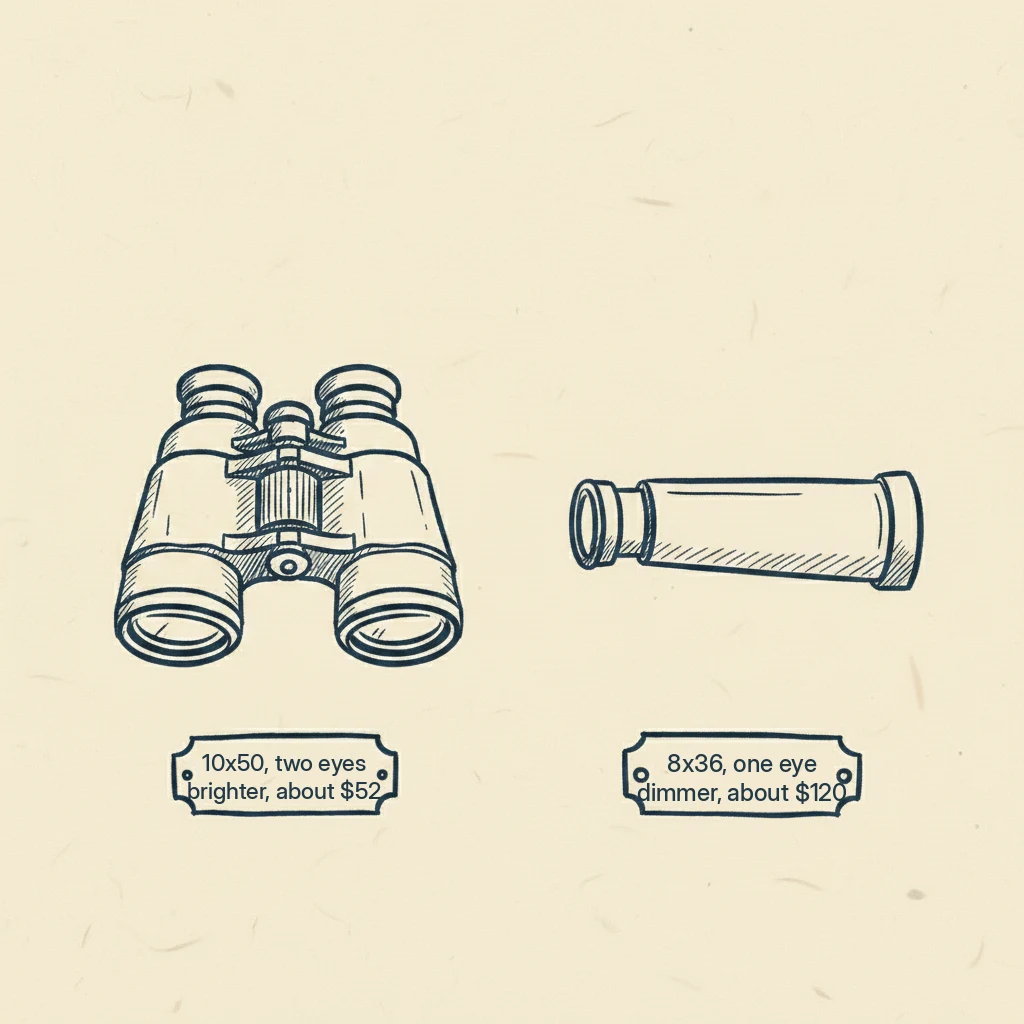
Now the part that surprises everybody, and it’s the whole reason I take this question seriously instead of waving it off. People buy monoculars believing they’re the cheap option. On our own priced shelf, that’s just not true for stargazing.
The binocular the beginners reach for, a plain 10x50 pair, is about $52. The monocular actually worth using at night, an 8x36, is about $120. So the thing you searched for, the “cheaper” one, costs more than twice as much as the binocular that beats it, and the binocular is brighter and uses both eyes on top of it. When the cheaper, brighter, two-eyed option is sitting right there, I have to tell you it’s sitting right there. That’s the whole job of this site.
What the 10x25 is really doing to your view
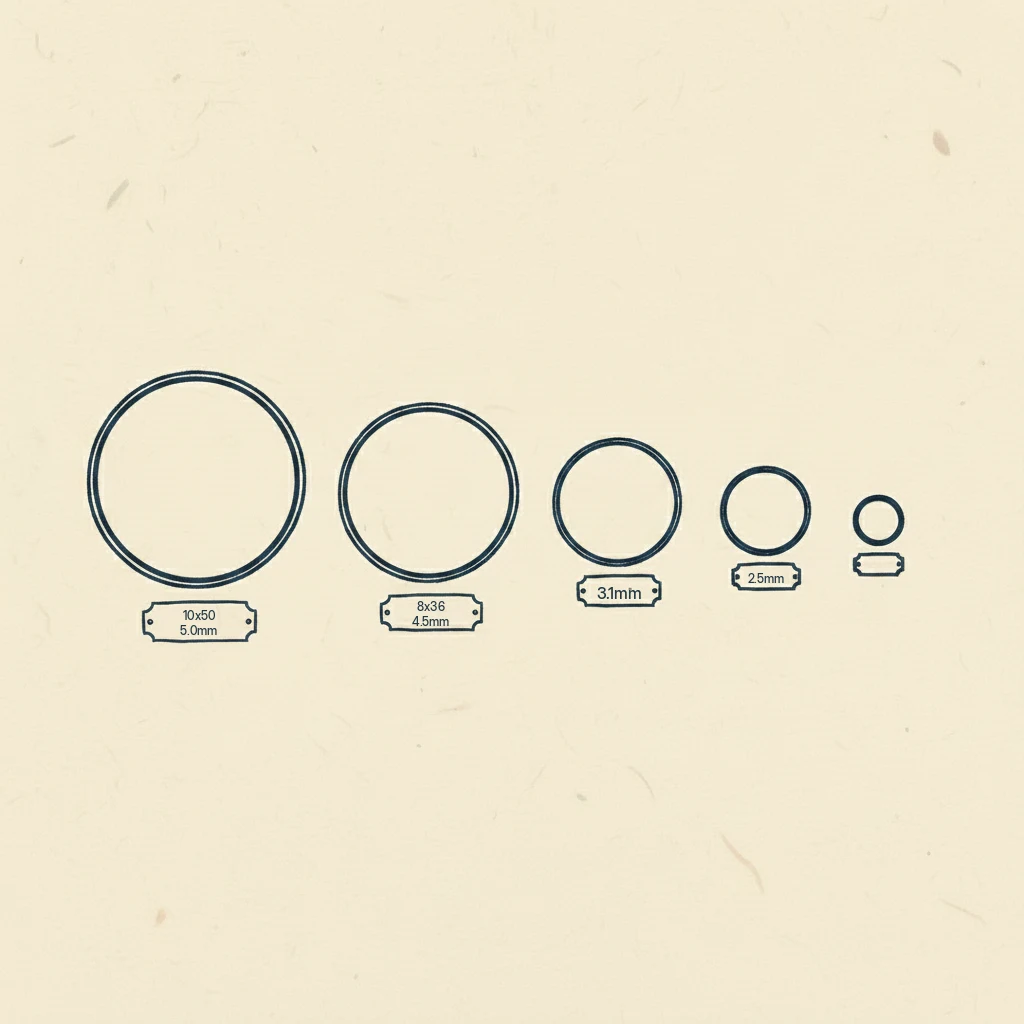
If you take one thing from this page, take this. The monocular the market pushes hardest is a 10x25, small enough for a keychain, about $80. And a 10x25 has an exit pupil, the width of light the eyepiece delivers to your eye, of two and a half millimeters.
Two and a half millimeters. At night, when your own pupil has opened up wide to drink in the dark, that’s a keyhole. You’re looking down a straw at a dim sky, with one eye, in a shaking hand. It’s the single most disappointing spec in this whole aisle, and it’s the one that sells the most, because 10x25 sounds powerful on a box.
So if you’re going to buy a monocular for the sky, don’t buy the 10x25. Buy the biggest front glass and the lowest number the monocular shelf offers you, which comes out to that 8x36 I mentioned, about $120. Bigger glass, lower magnification, a real 4.5mm circle of light instead of a 2.5mm keyhole. That one swap is worth the price of admission to this page.
One honest note on that 8x36: at least one owner had his break more than once. The maker fixed it under warranty each time. I’ll give you both halves of that and let you weigh it.
So when is the monocular actually right?
Plenty of the time, and I mean that. The searchers who land here aren’t wrong to ask; they just need the case drawn honestly. Here’s where one eye is the correct call, not the compromise.
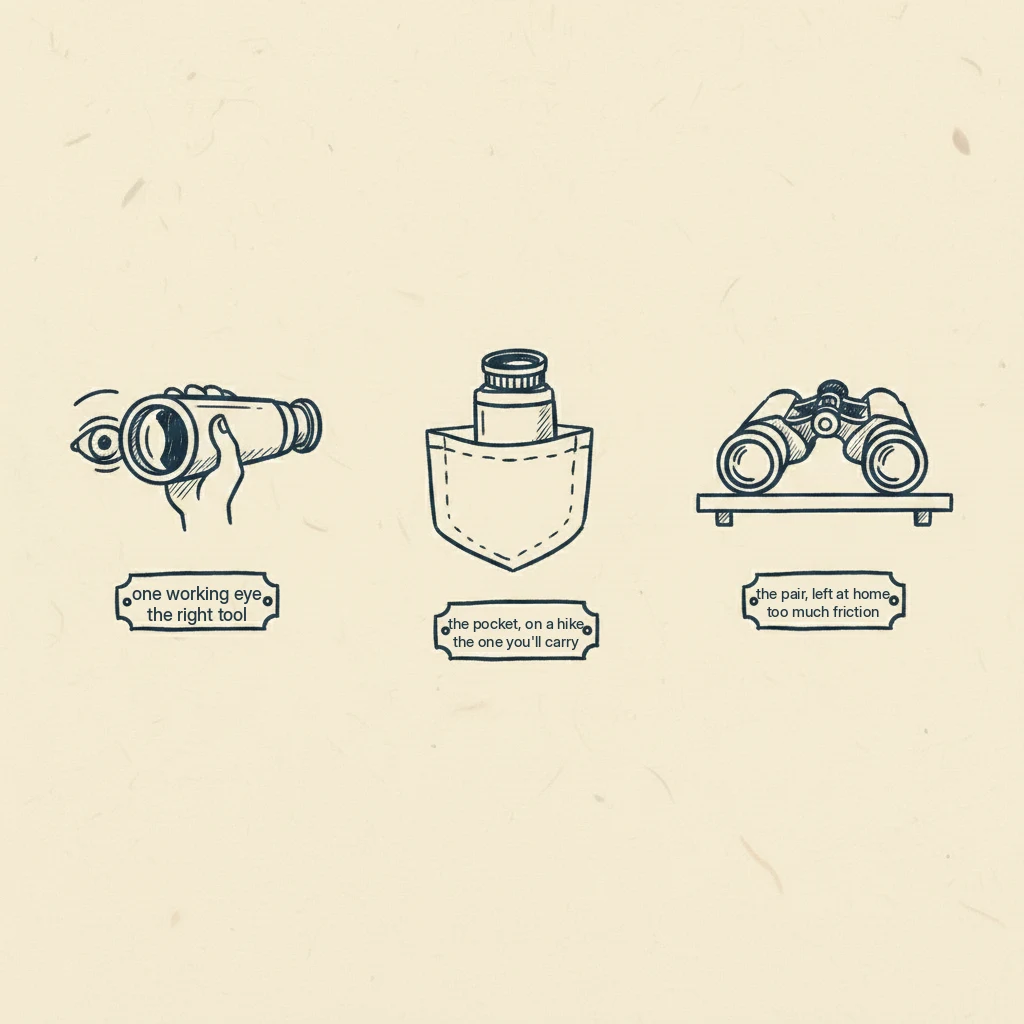
When your eyes won’t work together. If you have sight in one eye, or two eyes that won’t focus to the same point, a second barrel buys you nothing. I’ve read the birder who came to this exact conclusion, and the amateur astronomer who fought a cataract for years and couldn’t get both eyes to lock in on any binocular he tried. For those readers the monocular isn’t second best. It’s the right instrument, full stop. This is the reader I understand better than most, and there’s no hedging in it: if two barrels don’t serve you, one is the answer.
When the honest choice is a monocular you’ll carry versus binoculars you’ll leave home. A monocular weighs about half what a pair does and drops in a jacket pocket. And the best telescope, or the best anything, is the one you actually have with you when the sky does something. The friction of hauling a bigger pair is exactly why they stay on the shelf. If the pocket is what gets the glass outside, the pocket wins.
That’s the reason I can defend the monocular without straining, because it’s the same thing I say all over this site: the instrument you carry beats the better one that stayed home.
A word on the “which one tires your eyes” argument
You’ll run into pages that say a monocular strains your eye because eyes aren’t built to work alone, and other pages that say binoculars are the ones that tire you out and you should use a monocular instead. They flatly contradict each other, and neither one signs its name or shows its work. So I’m not going to pretend I can settle it for you, and I’m certainly not going to make a claim about your eyes I have no business making. What I’ll say is what’s actually measurable: light, price, and how many eyes. On those, the story above holds.
Questions people actually ask
Is a monocular good enough for stargazing?
For the moon and the brighter targets, a decent monocular does fine and it drops in a pocket. For faint deep-sky things it starts behind, because it’s one eye and the big astronomy glass isn’t made in one-eyed form. If it’s the piece you’ll actually carry, it’s good enough. If you’ll carry either, the binoculars see more.
Is a monocular cheaper than binoculars?
Not for stargazing, and this one genuinely surprised me. The 10x50 binocular the beginners use is about $52; the monocular worth using at night is about $120. The “cheaper” reputation doesn’t survive contact with the actual shelf.
What magnification monocular is best for astronomy?
Lower than you’d guess. Skip the 10x25 the market pushes, because at night its little circle of light is a 2.5mm keyhole. Reach for an 8x36 instead, bigger glass and less magnification, so more of the sky’s light reaches your eye. Bigger front number, smaller power number. That’s the rule.
Do I need a tripod for a stargazing monocular?
If you push the magnification, yes, because one hand shakes more than two and the wobble shows up as a jittery sky. Figure about $140 for the tripod and another $20 for the adapter that clamps the monocular on. At that point you’re spending monocular-plus-tripod money, which is another quiet nudge back toward the binocular.
What I’d tell you, one eye or two
If your eyes work together and you’re not committed to the pocket, my honest steer is to spend less and see more, and I’ve laid the whole case out at best binoculars for stargazing. If you want to learn the same instrument in daylight first, it’s the same tube as a monocular for bird watching. To actually find things once you’re out there, start with stargazing for beginners. The reason big magnification needs a tripod is spelled out at binoculars for long distance, the pocket-weight case lives at binoculars for hiking, and if it all comes down to your money going furthest, that’s the best binoculars for the money.
So here’s where I land, for you specifically. If your eyes cooperate and you’ll carry whatever you buy, get the binoculars: cheaper, brighter, two eyes. If it’s a monocular or nothing, because of one eye or one pocket, then a monocular it is, and make it the 8x36, not the keyhole they keep putting on the endcap.
Ray Ostrander
Ray spent three decades explaining the sky to twelve-year-olds and their parents, and every January, hearing which Christmas telescopes ended up in the closet. He doesn't own a wall of gear and won't pretend to. He reads everything, tells you what owners agree on, and flags what's just his judgment. His goal is simple: no more January closets.