
Trail Camera for Hunting: Buy on Trigger Speed, Not Megapixels
The hunters say the spec that decides it is trigger speed, under about 0.3 seconds, or the deer is gone before the shutter fires. Cellular's real worth is scouting without walking in and pressuring the deer, worth the monthly plan on land you hunt hard and that has signal. I've never hunted, so the woodcraft here is quoted from people who have.
 Ray Ostrander · Updated July 24, 2026 · how I decide
If you buy through a link here, the site earns a little. It's never why anything gets picked.
Let me be straight about my lane before you trust a word of this. I taught earth science for thirty-one years, and I’ve never hunted a day in my life. So the woods, the placement, the patterning, all of that I’m going to hand to the hunters and quote them, because they know it and I don’t. What I can do is translate the camera. And on the camera, the hunters and I agree on the one thing the box won’t tell you: the spec that decides whether you get the shot is trigger speed, ideally under about 0.3 seconds, not the megapixel number on the front. Cellular’s real value is scouting a camera without walking in and teaching the deer you’re there, which is worth the monthly plan on ground you hunt hard and that has signal, and skippable on ground you cross anyway.
What's on this page
- Here's what's actually happening with that megapixel number
- Cellular or SD card: the honest hunter's call
- The specs, translated
- About placement, briefly, and then it's theirs
- The 2026 hunting shelf, and what each is really for
- One thing that isn't the camera, or me
- Questions people actually ask
- What I'd do about picking one
Here’s what’s actually happening with that megapixel number
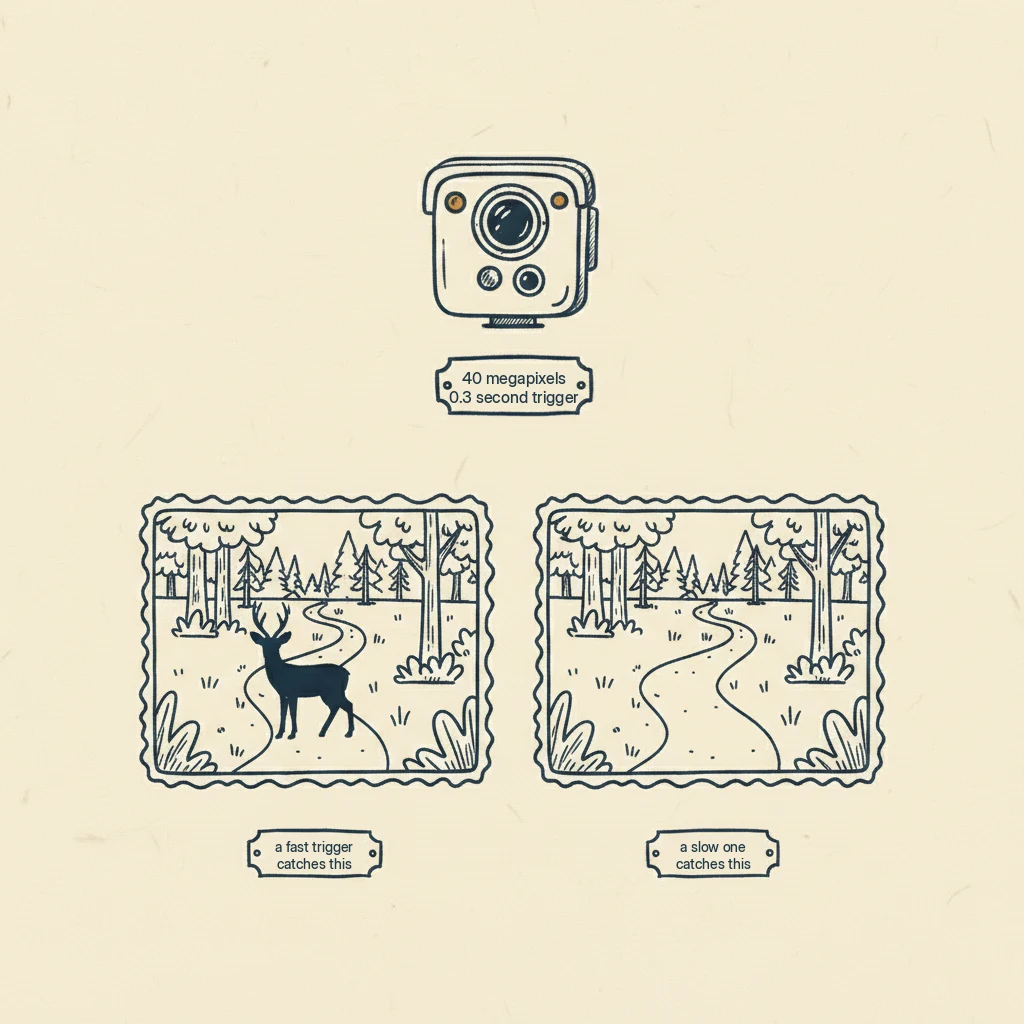
The box leads with megapixels because a big number sells. Forty megapixels sounds like more camera than twenty. But listen to what the hunters actually say when you ask them what matters, because it isn’t the picture’s size, it’s the picture’s timing.
Trigger speed is the gap between the camera sensing motion and the camera taking the picture. The hunters call it “the single most important spec,” and they put a number on it: anything under 0.3 seconds is excellent for fast-moving game like deer, and slower triggers “often miss the shot entirely,” especially on a narrow trail where an animal passes in a blink. Think about what that means. A 40-megapixel photo of an empty trail, because the buck had already stepped out of frame by the time the shutter fired, is worth exactly nothing. A sharp-enough photo of the actual deer, taken fast, is the whole point. Trigger speed gets you the animal. Megapixels only decide how big the picture of it is.
Cellular or SD card: the honest hunter’s call
This is where a hunter’s reason to buy differs from a homeowner’s, and it’s worth getting right.
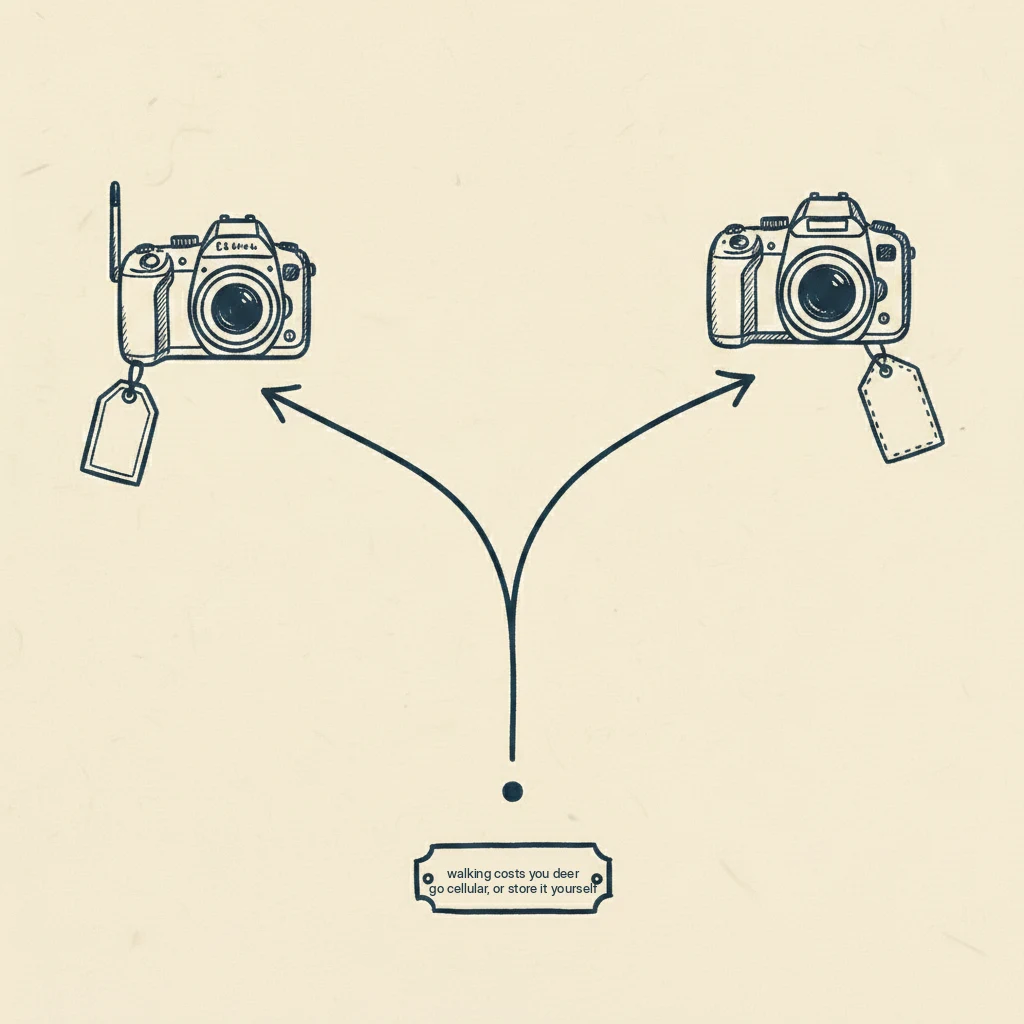
A cellular camera sends its pictures over the cell network to an app on your phone. For a hunter, the value isn’t just convenience. It’s that you can check what’s moving without physically walking to the camera, which the hunters describe plainly: you “scout without bumping deer at the camera.” Every trip in to pull a card leaves scent and disturbance and can push deer off the spot. Cellular spares you that. The trade, in their words, is “a monthly data plan and a dependence on cell coverage” at the camera’s location. So the rule they land on is clean: if your land has signal and you hunt pressured deer, cellular wins.
But it earns that plan only under those conditions. On ground you already cross on your way somewhere, walking to the camera costs you nothing, and a camera that stores locally does the job with no monthly bill. One caution if you go that route, and it comes straight from the hunters: “SD card corruption is the #1 cause of trail camera ‘failures.’” More than the camera itself, a bad card is what leaves you with nothing. That’s why cameras with built-in storage are becoming the reliable standard, and why, if you’re running SD cards, you carry a spare and swap them out.
The specs, translated
Here’s my part, the camera itself, in plain terms. The woods are the hunters’ to teach.
Trigger speed. Covered above, and it’s the one that matters most. Under about 0.3 seconds for deer.
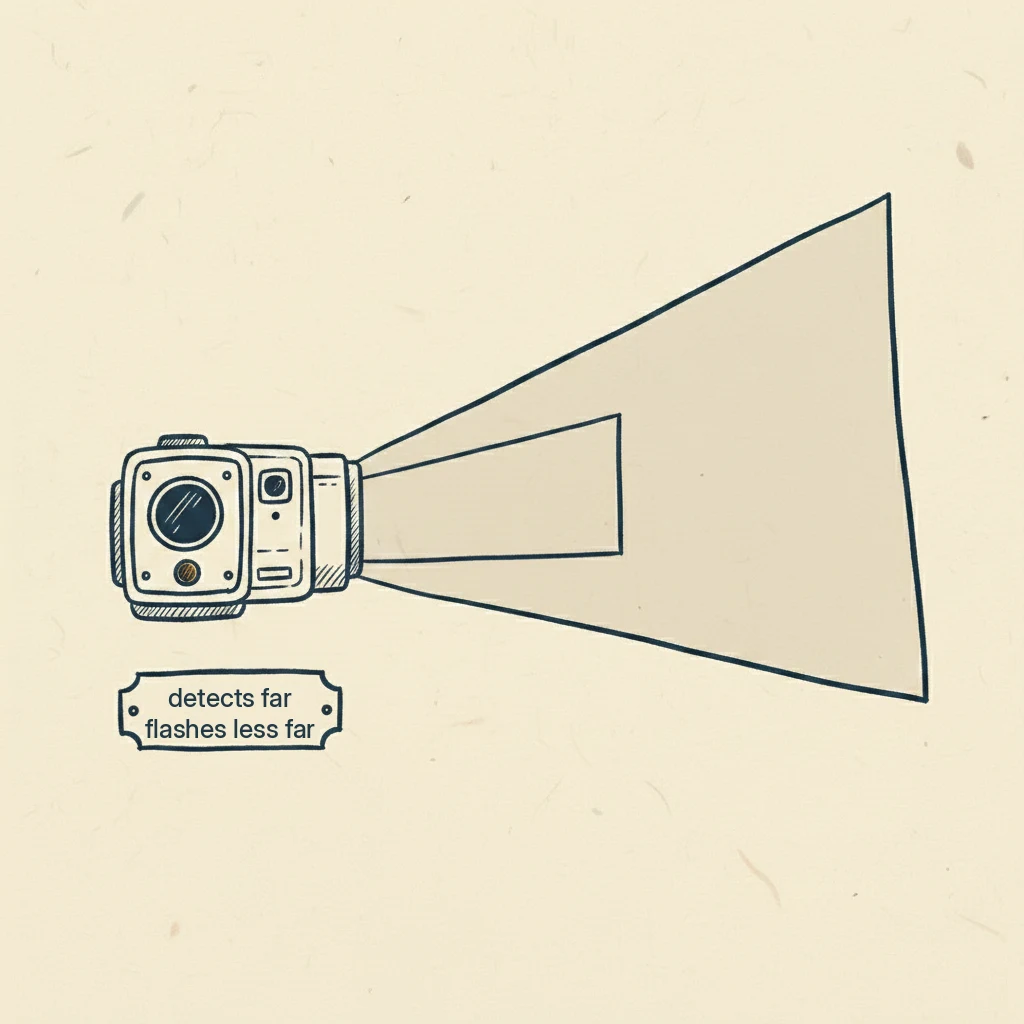
Detection range. How far out the camera senses motion, usually 80 to 100 feet. There’s a pairing to watch: the flash range should match or exceed the detection range. If the camera can sense an animal farther than its flash can light it, it’ll wake up for deer it can’t actually photograph in the dark, and you’ll get black frames.
Flash type. For hunting, low-glow is the usual default, because most deer are indifferent to its faint red glow and it takes a brighter, longer picture. No-glow gets reserved for the wary animals, mature bucks, coyotes, foxes, that might spook at any light. Worth knowing that this is exactly backward from a security camera, where a person would notice that red glow, so no-glow becomes the default. If you ever repurpose one of these to watch the driveway, the flash call flips.
Storage. Built-in memory dodges the bad-card problem. If you’re on SD cards, spares are cheap insurance.
About placement, briefly, and then it’s theirs
I’ll pass along one thing the hunters say, because it’s a common camera mistake and not really woodcraft: “Mounting cameras at chest height puts them directly in a deer’s line of sight.” They mount lower, around three to four feet for a trail, higher over a food plot edge. Past that, where to hang it, how to read the sign, how to pattern a buck, is the hunters’ trade, not mine, and they teach it far better than I could pretend to. Read them for that part. I’m just here for the camera.
The 2026 hunting shelf, and what each is really for
Same cameras the security crowd ends up buying, sorted by what a hunter actually cares about. Prices as I write this.
The Tactacam Reveal X 3.0, around $120, is the one most often called the best overall cellular pick; it’s low-glow. The Moultrie Edge 2 Pro, about $120, gets named for the best no-glow image quality, with a 0.30-second trigger and 100-foot range. The SPYPOINT Flex-M, about $80, is the data-plan value play, with 100 free photos a month. The Browning Recon Force Elite HP5, about $180, is the top SD-card pick if you’d rather skip a plan entirely.
The newer value option is the Moultrie Edge 3 at about $100, which packs 40MP images, 100-foot detection and flash range, connection on all four major networks, 16GB of built-in memory so there’s no SD card to corrupt, and a feature called AI Buck Detection that switches to video when a buck steps in front of it. Which is a good moment to point something out: “AI Buck Detection” means nothing to a homeowner watching a driveway and everything to a deer hunter. That’s the clearest proof there’s that this whole shelf was built for the hunter and merely visited by everyone else.
One thing that isn’t the camera, or me
Trail-camera use for hunting runs into its own set of rules, separate from anything about the camera’s specs. A number of states regulate game cameras, especially on public land, and some single out cellular or real-time cameras specifically, and those rules vary by state and by public versus private land, and they change. I’m not going to tell you what your state’s rules are, because I don’t know your state and I’d be guessing at something that matters. Check your own state’s current regulations before you deploy one. And the money side, the subscription math that applies to any cellular camera, hunting or not, has its own page.
Questions people actually ask
What’s the most important spec on a hunting trail camera?
Trigger speed. The hunters call it the single most important spec, and they want it under about 0.3 seconds for deer, because a slower trigger misses fast game on a trail entirely. Megapixels get the headline on the box, but a slow camera just takes a big, sharp photo of where the deer used to be.
Cellular or SD card for a hunting camera?
Cellular if your land has cell signal and you hunt it hard enough that walking to the camera pushes deer off the spot; it lets you scout without disturbing them, for a monthly plan. SD card or built-in storage if you already cross the ground anyway and want no monthly bill. If you use SD cards, carry a spare, since a corrupt card is the most common failure.
What trigger speed do I need for deer?
Under about 0.3 seconds is what the hunters call excellent for fast-moving game. On a narrow trail where a deer passes quickly, a slower trigger frequently catches an empty frame. Faster is better here in a way that matters more than almost any other number on the spec sheet.
Do hunting trail cameras need a subscription?
Only the cellular ones, and only to send pictures to your phone. A camera with built-in or SD-card storage records without any plan; you just collect the footage yourself. The plan buys you the ability to scout without walking in, which for pressured deer can be worth it, and for ground you cross daily often isn’t.
What I’d do about picking one
So here’s where I’d land, for the part that’s actually mine to weigh in on. I’d buy on trigger speed, not megapixels, and I’d want a flash range that keeps up with the detection range. I’d carry a spare card, or buy a camera with its own memory, because a bad card is what usually fails, not the camera. And I’d pay for cellular only if walking to the camera was genuinely costing me deer and the land had signal. The woods themselves I’d leave to the people who know them, which isn’t me.
If you’re setting one of these up to watch a property instead of a trail, the best trail camera for security reads the same shelf for that job, and no-glow vs low-glow explains why the flash choice reverses. For the plan costs, trail camera subscription plans compared does the math, and if you’re also glassing for game on the same land, binoculars for hunting is the companion over in the optics aisle.
Ray Ostrander
Ray spent three decades explaining the sky to twelve-year-olds and their parents, and every January, hearing which Christmas telescopes ended up in the closet. He doesn't own a wall of gear and won't pretend to. He reads everything, tells you what owners agree on, and flags what's just his judgment. His goal is simple: no more January closets.