
8x42 vs 10x42 Binoculars: Take the 8x42, and Here Is the Arithmetic
Most people should buy the 8x42. Same maker, same line: the 8x42 shows 393 feet at 1000 yards against 330 for the 10x42, a wider light beam for dawn and dusk, and 2mm more eye relief. The 10x42 isn't even smaller. Here's when it is still the right buy.
 Ray Ostrander · Updated July 25, 2026 · how I decide
If you buy through a link here, the site earns a little. It's never why anything gets picked.
Take the 8x42. For most people, in most conditions, it’s the better instrument, and the reason has nothing to do with optical quality and everything to do with three numbers that move when you go from 8x to 10x. Audubon’s own binocular guidance says it plainly: they strongly recommend binoculars that magnify six, seven or eight times, and they put it more bluntly than I would, noting that brightness and field of view are far more important than magnification. When Audubon and the spec sheet agree, my own preference stops mattering, which is the way I run every page here.
This is the most common question in binoculars and it’s the one people talk themselves out of correctly answering, because 10 is a bigger number than 8 and bigger numbers feel like more product for the money. So let me put the actual figures on the table, from the same maker in the same line, so nothing is moving except the magnification.
| Diamondback HD 8x42 | Diamondback HD 10x42 | |
|---|---|---|
| field of view at 1000 yards | 393 feet | 330 feet |
| angular field of view | 7.5 degrees | 6.3 degrees |
| light beam reaching your eye | 5.25mm | 4.2mm |
| eye relief | 17.0mm | 15.0mm |
| weight | 21.8 ounces | 21.3 ounces |
| closest focus | 5.0 feet | 5.0 feet |
Look at the last two rows before anything else, because they kill the argument most people make in their heads. Going from 8x to 10x buys you nothing in size. The two are built on identical body dimensions, the weight difference is half an ounce, and the 10x42 focuses no closer. You aren’t trading size for reach. You’re paying for magnification with field of view, brightness and eye relief, and getting nothing back except magnification.
What's on this page
- What the two numbers mean, in one paragraph
- The light beam is the number nobody states plainly
- Sixty-three feet of hillside, and why it decides whether you find the bird
- Ten times the magnification is ten times your pulse
- Eye relief drops, and glasses wearers feel it first
- When the 10x42 is genuinely the right buy
- The 10x42 or 10x50 question, folded in
- Questions people actually ask
- What I'd tell somebody standing between the two boxes
What the two numbers mean, in one paragraph
The first number is how many times closer the thing appears. The second is the width of the front lenses in millimetres, which is how much light the binocular collects. So 8x42 means eight times magnification through 42mm front lenses, and 10x42 means ten times through the same 42mm.
That’s the whole notation and I won’t relitigate it here, because I’ve written it out properly at the number on the box. What matters for this page is that the second number is identical in both, so every difference below comes purely from the first.
The light beam is the number nobody states plainly
Here’s the one I’d most want you to walk away with, because it decides how these two perform in the light you’ll actually care about.
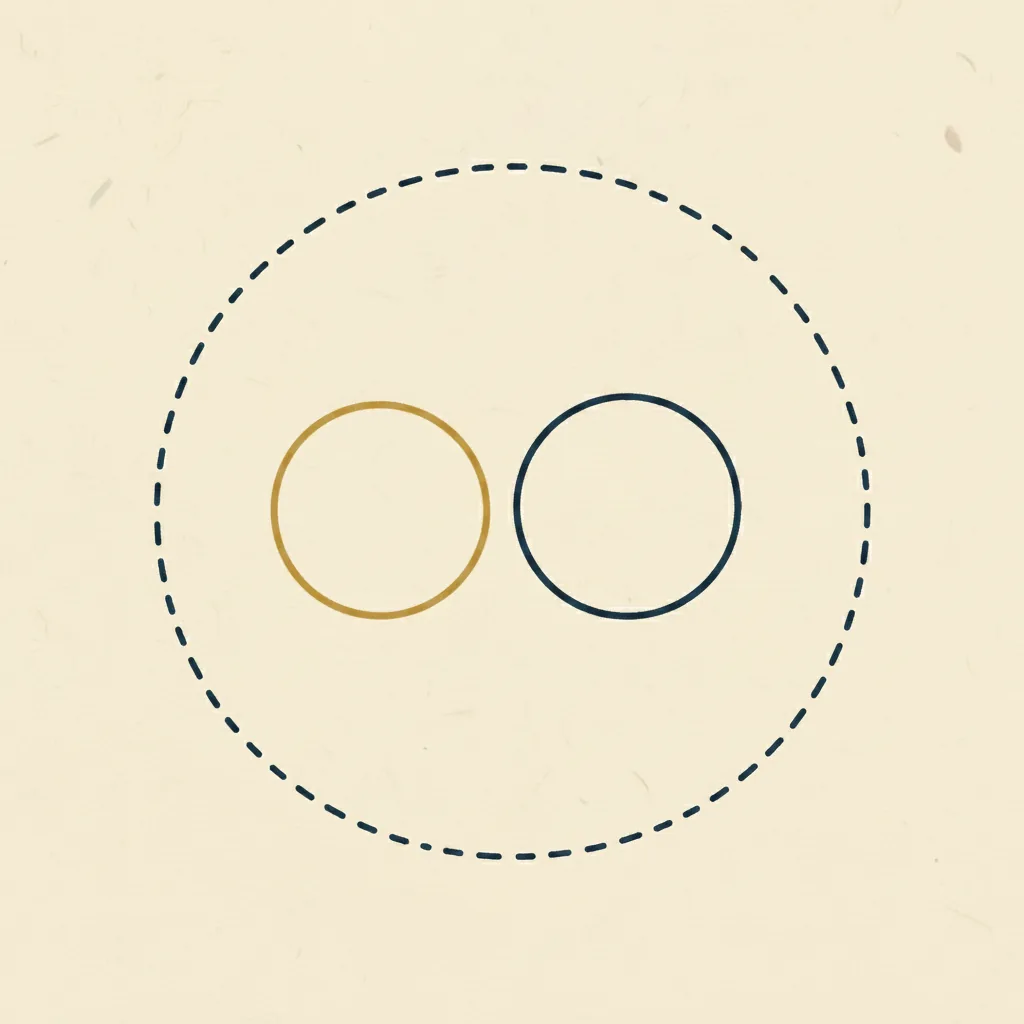
Nikon’s optics guide gives you the arithmetic: divide the front lens diameter by the magnification and you get the exit pupil, the width of the beam of light leaving the eyepiece and entering your eye. Wider beam, brighter picture.
42 divided by 8 is 5.25mm. 42 divided by 10 is 4.2mm. The 8x42 delivers a beam a quarter wider than the 10x42 from the same size front lens.
Now the part that turns that into something you can feel. The same guide puts the human pupil at about 2mm in daylight and about 7mm in the dark. At noon, your pupil is narrower than either beam, so both binoculars look equally bright and this whole section is academic. But at dawn and at dusk your pupil opens well past 4.2mm, and at that point the 10x42 is delivering less light than your eye is ready to accept while the 8x42 is still filling more of it.
Dawn and dusk is when animals move and when birds feed. It’s the light you’re most likely to be out in and the light in which detail is hardest to come by, and it’s precisely where the 8x42 pulls ahead. Audubon says the same thing from the other direction: ten power and higher models are not as bright as seven or eight power models.
Sixty-three feet of hillside, and why it decides whether you find the bird
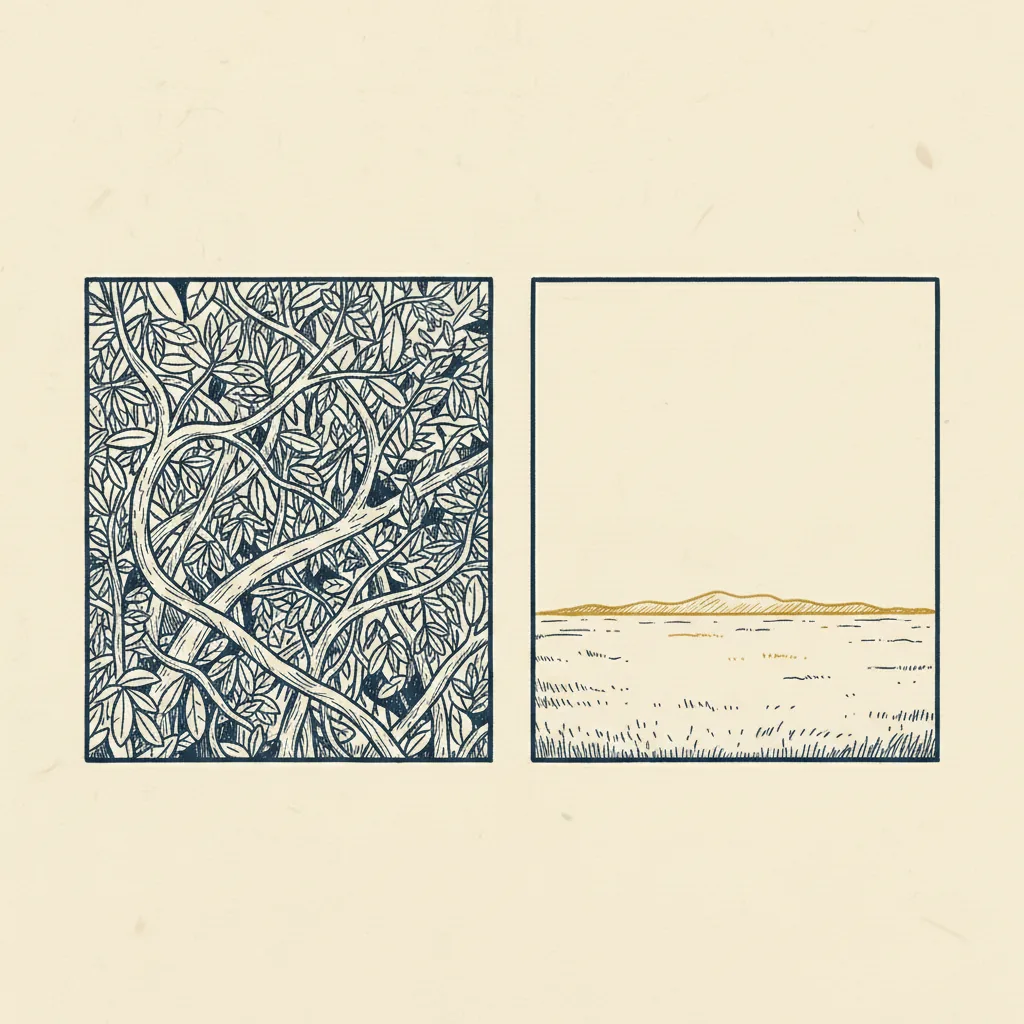
The field of view gap is 393 feet against 330 at 1000 yards, which is 63 feet, or about a fifth more ground in the 8x42.
That sounds abstract until you’ve tried to get a bird in view. The sequence is always the same: you see movement with your naked eye, you note where it is against some landmark, you bring the binoculars up and try to land on it. A wider field makes that landing enormously easier, because you have more margin for being slightly off. A narrower field means more attempts, and every attempt costs seconds, and small birds don’t give you many seconds.
Audubon’s phrasing is that ten power and higher binoculars slash the field of view, and they tie it directly to the practical problem of locating and following a moving bird. That matches what people actually report: the frustration with 10x is rarely about image quality, it’s about not being able to get on the subject.
In birding, and in most glassing, finding it is the job. Once you’ve found it, both binoculars show you plenty. The 10x only pays off in the situations where you’ve already found the thing and it’s holding still, which is a much smaller share of your time outdoors than you’d guess.
Ten times the magnification is ten times your pulse
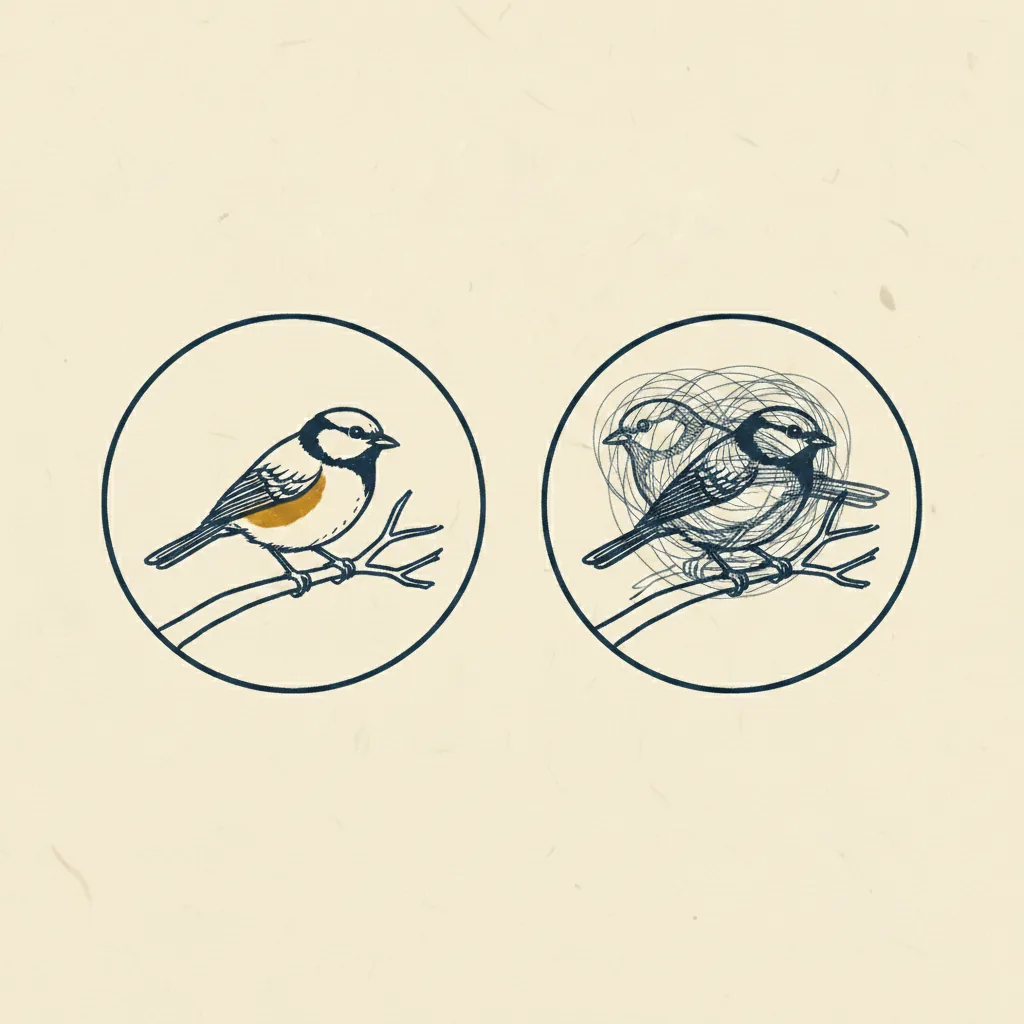
Magnification multiplies everything, including the movement in your hands. Audubon puts it exactly that way: ten power binoculars magnify those movements ten times, and the more the image moves, the less useful information you get from it.
This is the effect people notice within thirty seconds of picking up a 10x and often can’t name. The picture won’t sit still. It isn’t a defect and a steadier person doesn’t escape it, because the shake is your heartbeat and your breathing and there’s no technique that removes them. You can reduce it by bracing against something, and past roughly 12x you have to.
Audubon flags a second source of blur that’s nothing to do with your hands, and it’s a good one to know about: higher magnification also amplifies the distortion from rising hot air, the effect usually called heat shimmer, which can make a sharp image impossible when you’re looking across an open field or a marsh on a warm day. So the 10x can be the worse instrument in exactly the wide open country where you bought it for the reach.
Eye relief drops, and glasses wearers feel it first
Eye relief is how far back your eye can sit and still see the whole field. The 8x42 publishes 17.0mm, the 10x42 publishes 15.0mm, and that 2mm matters more than it looks like it should if you wear glasses, because your spectacle lens is already holding your eye away from the eyepiece.
At 15mm, a lot of glasses wearers see a dark ring creeping in at the edge of the field, which is the field of view they paid for disappearing. At 17mm, most don’t. If you wear glasses and you’re choosing between these two, that row of the table is arguably more decisive than the magnification, and it points the same way as everything else. The full treatment is at binoculars for glasses wearers.
When the 10x42 is genuinely the right buy
I don’t want to talk you out of it if you’re the person it fits, and there is a real one.
Open country at long range. Western hunting, prairie, big agricultural fields, anywhere your typical sight line is measured in hundreds of yards rather than tens. When everything is far away, the extra reach is doing work every time you raise the glass, and the narrower field costs you less because there’s less clutter to get lost in.
Glassing from a stable rest. Sitting with your elbows on your knees, leaning on a fence, prone with a pack under the binoculars. Take the shake out and the 10x’s main disadvantage largely goes away.
Judging detail rather than finding subjects. If your job is deciding what something is once somebody else has pointed at it, or you’re watching one stationary thing for a while, the 10x is better at that specific task.
Open water. Distant waterfowl, boats, shorelines. Nothing to get tangled in and everything a long way off.
If two or more of those describe your usual day, buy the 10x42 with a clear conscience. And if long distance is really the whole point for you, there’s a page for that: binoculars for long distance. For safari specifically, where this exact question comes up constantly and the answer is shaped by the vehicle you’re sitting in, I’ve handled it at best binoculars for safari.
The 10x42 or 10x50 question, folded in
People who land on 10x often then ask whether to go up to a 50mm front lens, so here it is in short form.
Same magnification, bigger front lens. Run the arithmetic from Nikon’s guide again and 50 divided by 10 is 5.0mm, so a 10x50 recovers nearly all the light the 10x42 gave away, landing just under the 8x42’s 5.25mm. That’s a real gain in the dawn and dusk light where 10x42 is weakest.
What it costs is bulk and weight, because you’re carrying more glass, and how much more varies by model enough that I won’t quote you a figure I haven’t checked on the specific pair you’re considering. Expect noticeably bigger in the hands and around the neck, and expect the case not to fit.
What a 10x50 does not fix is the shake or the field of view, because both of those come from the magnification, which hasn’t changed. So a 10x50 is the right answer for someone who wants 10x reach and needs low light performance and accepts the size. It is not a way to get 8x42 handling with 10x reach, and nothing is.
Questions people actually ask
Is 10x42 better than 8x42?
Only for a specific set of conditions: long sight lines, a stable rest, stationary subjects. For general use the 8x42 is the better instrument, because it shows about a fifth more ground, delivers a wider beam of light in low light, and has more eye relief, while weighing essentially the same and costing about the same. Bigger magnification is not a better binocular.
Which is better for birding, 8x42 or 10x42?
8x42, and this one isn’t close. Audubon recommends six to eight power and specifically warns that ten power slashes the field of view and amplifies hand movement. Birding is mostly the act of getting onto a small moving subject quickly, which is exactly what a wide field of view buys you.
What does 8x42 mean on binoculars?
Eight times magnification through 42mm front lenses. The first number is how much closer things look, the second is the diameter of the objective lenses in millimetres, which sets how much light the binocular gathers. Full explanation at the number on the box.
Are 10x42 binoculars hard to hold steady?
Harder than 8x42, and noticeably so for most people, because magnification multiplies hand movement along with everything else. Most people can hold 8x comfortably, find 10x usable but visibly less steady, and need a brace or a tripod somewhere around 12x. Bracing against a tree, a post or your own knees fixes most of it.
10x42 or 10x50, what is the difference?
Same magnification, a 50mm front lens instead of 42mm. The 10x50 gathers more light and delivers a 5.0mm beam to your eye instead of 4.2mm, which helps at dawn and dusk. It’s bigger and heavier, and it does nothing about field of view or hand shake, both of which come from the 10x.
Does the 8x42 actually weigh less?
No, and that surprises people. On the pair compared here, the 10x42 is half an ounce lighter with identical body dimensions and the same 5 foot close focus. Weight is not part of this decision.
What I’d tell somebody standing between the two boxes
Buy the 8x42. If you can’t decide, that’s the answer, and it’s the answer for the same reason it’s the answer to most gear questions: it’s the one that’s better at the thing you’ll do most, which is finding whatever you came out to look at.
Buy the 10x42 if you already know your country is open, your subjects are far away and mostly still, and you’ll often have something to lean on. That’s a real reader and the 10x is a real answer for them. If you want the exact pair from this page’s table, they’re the Diamondback HD 8x42 and the Diamondback HD 10x42, both about $240, which is the point: same money, same body, different trade.
And if you wear glasses, look at the eye relief row before anything else. Two millimetres decides whether you get the whole field of view you paid for.
A few things you’re probably also wondering:
- Ready to pick a specific pair? See best binoculars for the money.
- Want something that fits in a pocket instead? See compact binoculars for bird watching.
- Buying for hunting? See binoculars for hunting.
- Tired of them swinging off your neck? See binocular harness.
- Wondering whether you need far more magnification than either? See binoculars vs spotting scope.
Ray Ostrander
Ray spent three decades explaining the sky to twelve-year-olds and their parents, and every January, hearing which Christmas telescopes ended up in the closet. He doesn't own a wall of gear and won't pretend to. He reads everything, tells you what owners agree on, and flags what's just his judgment. His goal is simple: no more January closets.