
The Telescope to See Jupiter, and What Its Stripes and Moons Really Look Like
Any 60mm telescope shows Jupiter's two cloud belts and all four big moons. The Great Red Spot needs about 100 to 130mm and steady air, and it's pale salmon, not red, and only facing you part of the time. Jupiter is biggest and brightest each year around opposition.
 Ray Ostrander · Updated July 24, 2026 · how I decide
If you buy through a link here, the site earns a little. It's never why anything gets picked.
Good news, and it’s cheaper than you think. Any telescope of 60mm or larger shows Jupiter’s two dark cloud belts at about 50x, and all four of its big moons show up in any scope at all. The Great Red Spot is the thing that costs more: it needs roughly a 100 to 130mm scope and steady air, and here’s the part nobody tells you, it’s pale salmon, not red, and it’s only facing you part of the time. Best magnification is 100 to 150x. Jupiter is biggest and brightest each year around opposition, and its belts and moons stay an easy target for months on either side of it.
So the entry ticket for a genuinely great Jupiter is a cheap tabletop scope. What you spend more for isn’t the planet, it’s one particular spot on it. Let me walk you through exactly what you get at each step.
What's on this page
- What Jupiter really looks like through a small telescope
- How much telescope you actually need for Jupiter
- The Great Red Spot, and why it's usually not there
- The moons are a homework assignment disguised as wonder
- Why some nights Jupiter just shimmers
- The Jupiter shelf, cheapest first
- The boring cousin, and for Jupiter it's a serious answer
- Questions people actually ask
- What I'd tell a parent in the hallway
What Jupiter really looks like through a small telescope
Set the picture before you buy, because this is where the poster does its damage. Through a first scope, Jupiter is a small bright cream-colored disc with two dark stripes across it and four tiny points of light strung out in a line beside it. That’s it, and it’s plenty. The stripes are cloud belts. The four points are moons.
And here’s the thing that made this my favorite object to hand a twelve-year-old. Those four moons are the exact same four that Galileo saw in 1610, the night he worked out they were circling Jupiter and not us. You’re looking at his discovery, live, with your own eye, and the light crossed the whole width of the solar system to get to you. It’s small, and it’s real, and unlike the poster it’s genuinely there. Real beats the poster every time, and Jupiter proves it for the price of a cheap scope.
How much telescope you actually need for Jupiter
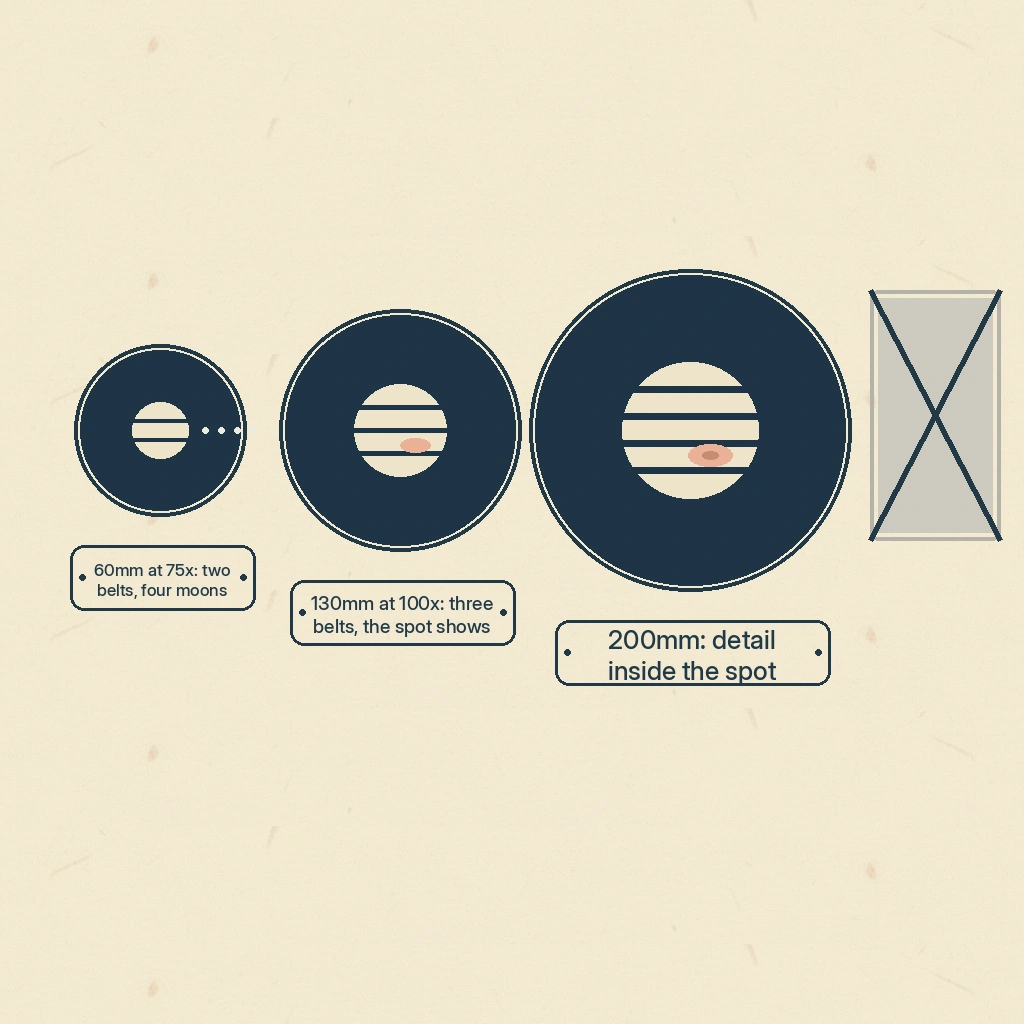
Here’s the honest ladder, and it climbs slowly. Laid out aperture by aperture, a 60 to 70mm scope at 75 to 100x gives you two dark belts, a bright cream planet, and the four moons as pinpricks. Owners back this up: people who compared nicer scopes against a cheap gift scope still reported great views of Jupiter, and tell beginners not to be discouraged by what they read online. The cheap scope’s Jupiter isn’t a consolation prize.
| telescope size | what you actually see |
|---|---|
| 60 to 70mm | two dark belts, a cream planet, four moons like pinpricks |
| 80 to 100mm | the two belts plus a hint of a third, Red Spot as a pale oval |
| 114 to 130mm | three steady belts, Red Spot as a salmon-colored oval |
| 150 to 200mm | four or five belts, detail inside the spot |
| 250mm and up | six or more belts, the spot with turbulence around it |
The one upgrade Jupiter specifically justifies is the step into the 100 to 130mm range, because that’s where the Great Red Spot turns from a rumor into a shape you can actually find. Below that you’ll see the belts plainly and the spot barely or not at all. That’s the honest fork: belts are nearly free, the spot costs a bit more.
And you can’t cheat it with magnification. Here’s what’s actually happening when you crank the power: the image gets bigger, dimmer, and mushier all at once. Two separate truths sit side by side here, and I’ll keep them separate so you don’t blend them into a wrong number. The physics ceiling is about 50 times per inch of aperture, an absolute cap you can’t exceed usefully. The practical sweet spot for Jupiter sits below that, around 100 to 150x, where a sharp view beats a blurry big one. The box that shouts 600x on a 60mm tube is quoting a number four or five times past the point where the picture falls apart.
The Great Red Spot, and why it’s usually not there
This is the section that saves your first night, so read it carefully. That vivid orange-red swirl on every poster and textbook cover is a camera’s version. To your eye, through a small scope, the Great Red Spot is a pale salmon-pink oval, more of a pinkish-gray notch than a spot. It has fairly been called the Great Pale Salmon Spot. Knowing that before you look is the whole difference between “my telescope is broken” and “there it is.”
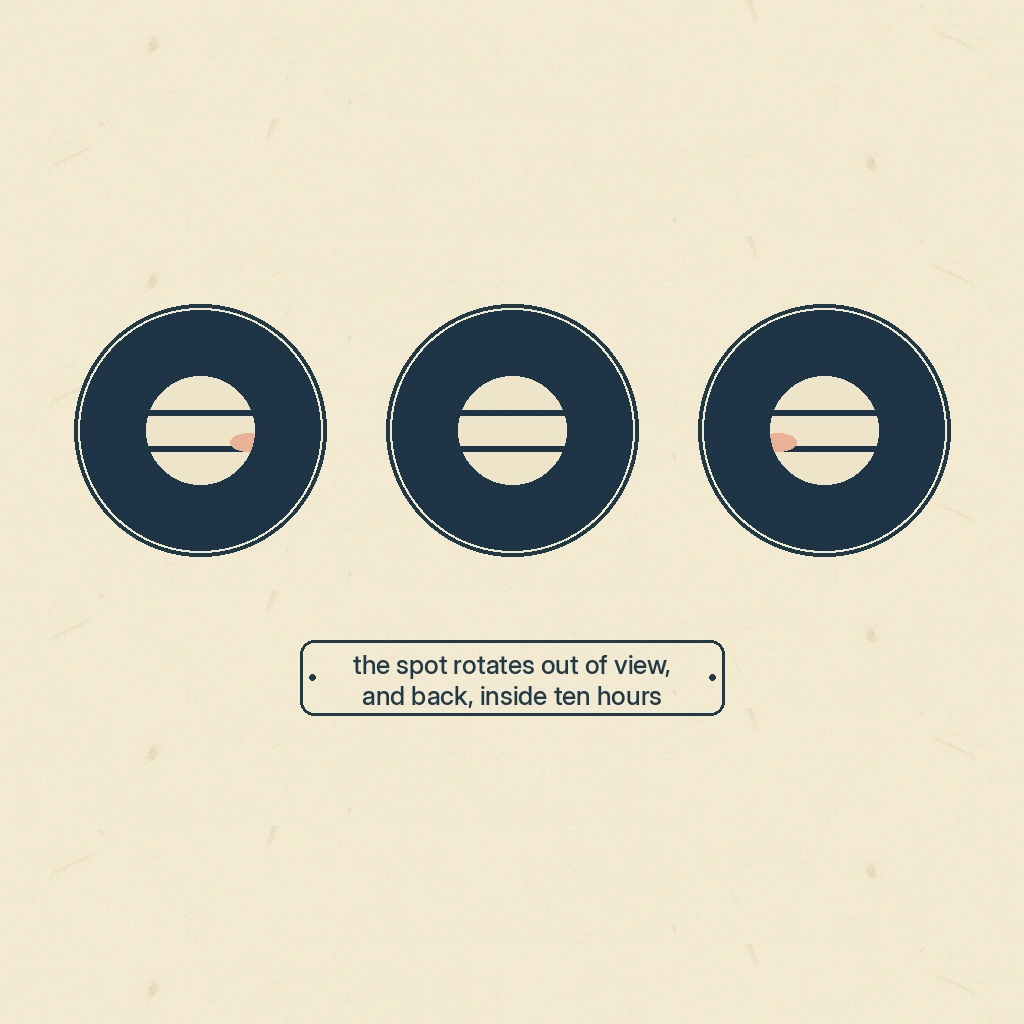
And here’s what’s actually happening the night you can’t find it at all: Jupiter spins fast, once in about ten hours, so the Red Spot is only facing Earth part of the time, roughly every couple of hours it rotates into view and back out again. If it isn’t there, your scope is fine and you’re on the right planet. The spot is just around the back. Come out later, or another night, and it swings around to face you.
The moons are a homework assignment disguised as wonder
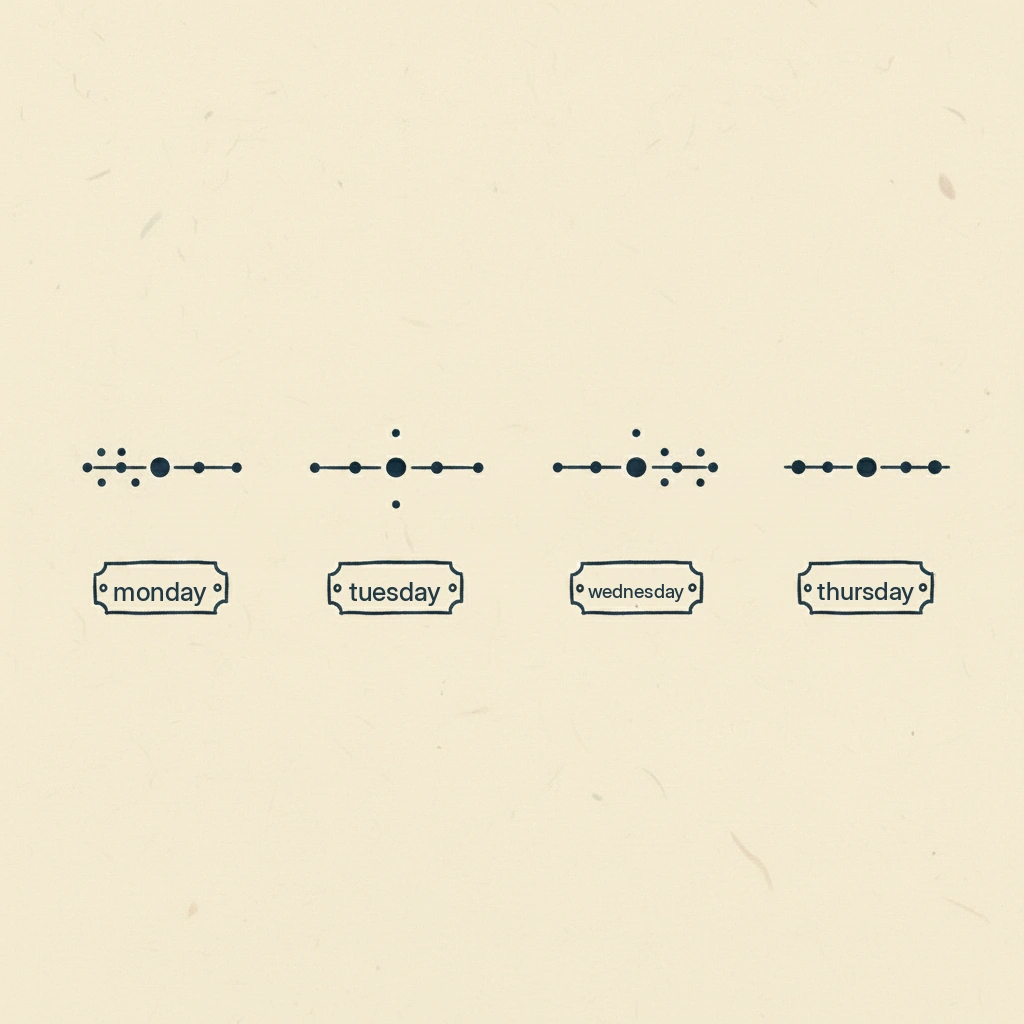
This is the part no gear blog will give you, and it’s the science teacher in me talking. Jupiter’s four big moons visibly move. Their arrangement changes from one night to the next as they orbit, so if you sketch their positions four nights running, you’ll watch Galileo’s 1610 discovery reassemble itself in your own notebook. A kid who does that isn’t looking at a picture of science. They’re doing it. There’s no better first project in the whole sky, and it costs nothing but four clear nights and a pencil.
Why some nights Jupiter just shimmers
If Jupiter looks like it’s boiling, that isn’t your gear and it isn’t a bad scope. Jupiter rides low in the sky from most of the northern half of the world, which means its light has to punch through more of our atmosphere to reach you, and on most nights the image shimmers or boils at high power. Steady air makes a significant difference. One careful observer’s binocular log across several nights is dominated not by his equipment but by the weather: moisture forming a halo, the view washed out one night and crisp the next, on the very same gear. The same instrument shows you different amounts of Jupiter on different nights. Before you blame the telescope, wait for a calm one.
The Jupiter shelf, cheapest first
All researched, none of it looked through by anyone here, and you’ll see that said plainly on the About page. Prices are rounded to what I’m seeing as I write this, and where sources disagree I’ll tell you the spread rather than make up a middle.
- Celestron FirstScope 76mm tabletop, about $75. A tiny reflector that shows the belts and moons. The genuine floor.
- Celestron AstroMaster 70AZ. Prices on this one are all over the place: I’m seeing figures from about $150 up to the maker’s own sticker near $200, so shop it around. It shows two belts clearly at 75x, and owners have reported great views of Jupiter through one. For most first buyers this is enough scope for Jupiter.
- Sky-Watcher Heritage 130P, about $230 to $280. This is the step into the 100 to 130mm range that starts buying you the Red Spot as a real oval.
- Sky-Watcher Skymax 102, about $300, sometimes on sale from a higher sticker. A long, planet-friendly Maksutov design that gives high-contrast views of exactly this kind of target.
- Sky-Watcher Classic 200P Dobsonian. Priced between about $600 and $725 depending on the source. An 8-inch that shows four or five belts and real detail in the spot. The 8-inch is the hobby’s one right answer, and it’s also more scope than a beginner reaches for, so buy it when you’re ready, not first.
The boring cousin, and for Jupiter it’s a serious answer
On most pages I tell families to buy binoculars before a telescope. For Jupiter, binoculars get you something real and something limited, and it’s worth being exact about the line. A steady pair of binoculars shows Jupiter’s four moons, the same four Galileo found. That’s a genuine, historic thing to see for about fifty dollars. But binoculars won’t show the cloud belts, and even the moons take patience: in that same observer’s log, a 10x50 pair showed just one moon on one night, and even on his best, clearest night, positively identifying all four took about twenty minutes of watching a “bulge” at the edge resolve into the last moon.
So the honest border is this. Binoculars get you Galileo’s discovery. A telescope gets you the belts, easily, plus the moons without the wait. That border is the cleanest single reason to buy a telescope for a planet, and I make the full case on telescope vs binoculars.
Questions people actually ask
What size telescope do I need to see Jupiter?
Less than you’d guess. A 60mm scope at 50x already shows the two main cloud belts and all four big moons, and that’s a genuinely good Jupiter. Step up to about 100 to 130mm only if you specifically want the Great Red Spot as a real salmon-colored oval. Above that you’re counting extra belts, which is lovely but not necessary.
Can I see Jupiter’s Great Red Spot with a small telescope?
Partly, and with the right expectations. In an 80 to 100mm scope it shows as a pale oval when it’s facing your way; a 130mm and up makes it a clear salmon shape. It’s never the vivid red of the posters to your eye, and it’s only pointed at Earth part of the time, so if you don’t see it, wait a couple of hours or try another night.
Can you see Jupiter’s moons with binoculars?
Yes, and it’s a real thrill: a steady pair shows the four big moons as points of light beside the planet, the same ones Galileo drew in 1610. What binoculars won’t show is the cloud belts, and even the moons can take a big pair and some patience. For the stripes, you want a telescope.
Can I see Jupiter from the city?
Yes. The planets shrug off light pollution almost entirely, so Jupiter’s belts and moons look the same from a bright suburb as they do from a dark field. City light steals the faint galaxies and nebulae, not the planets. A small scope on a clear night in town does the job.
What I’d tell a parent in the hallway
Buy the cheapest honest scope, a 70mm around a hundred-something dollars, and tell the kid ahead of time that Jupiter will be a small cream disc with two stripes and four moons in a row, not the poster. Then have them sketch the moons four nights running and watch the moons move. That’s the best two dollars of pencil-and-paper science I ever assigned, and Jupiter grades it for you.
A few things you’re probably also wondering:
- Want the whole planet lineup, not just Jupiter? See telescope to see planets.
- Chasing Saturn’s rings too? See best telescope to see saturn.
- Starting your first night out right? See telescope to see the moon.
- Wondering what a telescope really shows in general? See what can you see with a telescope.
- Trying to figure out the budget? See how much does a telescope cost.
Ray Ostrander
Ray spent three decades explaining the sky to twelve-year-olds and their parents, and every January, hearing which Christmas telescopes ended up in the closet. He doesn't own a wall of gear and won't pretend to. He reads everything, tells you what owners agree on, and flags what's just his judgment. His goal is simple: no more January closets.