
Monocular vs Binocular: The Short List Where One Eye Actually Wins
For almost everyone, binoculars. A monocular wins on a specific short list: pocket size, one free hand, a tight budget, or vision in one eye. What surprised me is what it doesn't give up. A comparable 8x monocular shows the same field of view as the binocular at under half the weight.
 Ray Ostrander · Updated July 25, 2026 · how I decide
If you buy through a link here, the site earns a little. It's never why anything gets picked.
For almost everyone, buy binoculars. The monocular wins on a short and specific list, and if you’re not on that list you’ll be happier with two barrels. But the reason isn’t the one most pages give you, and the numbers surprised me when I lined them up.
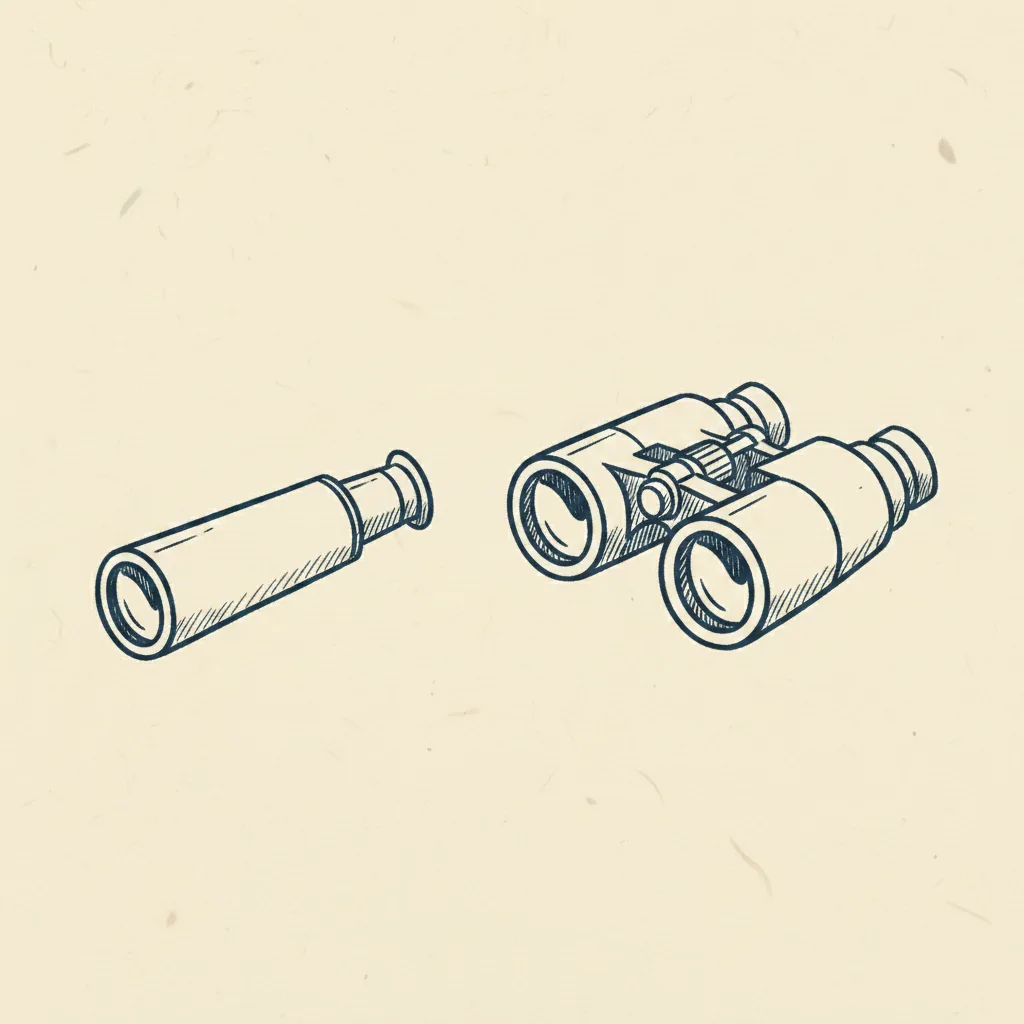
Here’s the pair I compared, both from the same maker in the same class so nothing else is moving. Vortex’s Solo 8x36 monocular shows 393 feet at 1000 yards, an angular field of 7.5 degrees, and weighs 9.7 ounces. Vortex’s Diamondback HD 8x42 binocular shows 393 feet at 1000 yards, an angular field of 7.5 degrees, and weighs 21.8 ounces.
Read that again. Identical field of view. Identical magnification. Under half the weight.
So the monocular isn’t a compromised optic that shows you less of the world. It shows you exactly as much, through one eye instead of two, in a tube you can close your hand around. What you give up is real, but it isn’t reach and it isn’t field of view, and almost every page you’ll find on this gets that wrong. The same-maker, same-line rule is why this one doesn’t, and the rest of the machinery behind these pages is written out at how I decide.
What's on this page
- What you actually give up is comfort over time
- The four people who should buy one
- Where the monocular quietly loses light
- Price is not the automatic win people expect
- The thermal ones on that search page are a different animal
- Glasses, focus knobs, and the small stuff that decides it
- The case nobody frames as a case: buying one as your second optic
- If you do buy one, here's what to actually check
- Questions people actually ask
- What I'd tell somebody deciding at the counter
What you actually give up is comfort over time
One eye works fine for a glance. It’s the fifteenth minute that gets you. You’re either squinting the other eye shut, which is a muscle doing work it wasn’t asked to do, or you’re leaving it open and asking your brain to ignore half of what it’s receiving. Neither is hard. Both are tiring in a way that creeps up on you.
That’s the honest core of it, and it’s a comfort problem rather than an optical one. Two eyes also give you the sense of depth that makes a bird in a tangle of branches resolve into a bird rather than a puzzle, and one eye flattens that out. If you’ve ever closed one eye and tried to thread something, you know the feeling.
So the shape of the decision is: how long, in one sitting, will you be looking through this thing? Under a minute at a time, repeatedly, the monocular is genuinely pleasant. Half an hour scanning a wetland, and you’ll wish you had the pair.
The four people who should buy one
The person who won’t carry the binoculars. This is the big one and it isn’t a character flaw, it’s arithmetic. A monocular at 9.7 ounces goes in a coat pocket and stays on your body. A binocular at 21.8 ounces wants a strap or a harness, and the harness is one more thing to remember. The optic you have with you beats the better optic in the hall closet, every single time, and it isn’t close.
The one free hand situation. Dog walkers, kayakers, anybody on a trail with a pole, a parent holding a small hand. A monocular asks for one hand and gives you a full view. A binocular held one handed is a wobbly, unhappy thing.
The tight budget, with a caveat I’ll get to. One barrel of glass instead of two ought to cost less, and at the same tier it generally does.
Someone with vision in one eye, or a large difference between eyes. For that reader, a monocular isn’t a downgrade at all. It’s the right instrument, because the second barrel of a binocular is doing nothing but adding weight and cost. I’d say plainly: this is the one case where I’d recommend the monocular first and without hedging.
Where the monocular quietly loses light
Now the thing that doesn’t show up in the headline numbers, and this is the part I’d want you to know before you spend.
The second number on any optic is the width of the front lens in millimetres, and it’s how much light the thing collects. Nikon’s optics guide gives you the arithmetic: divide the objective diameter by the magnification and you get the exit pupil, which is the width of the beam of light arriving at your eye. A wider beam is a brighter picture.
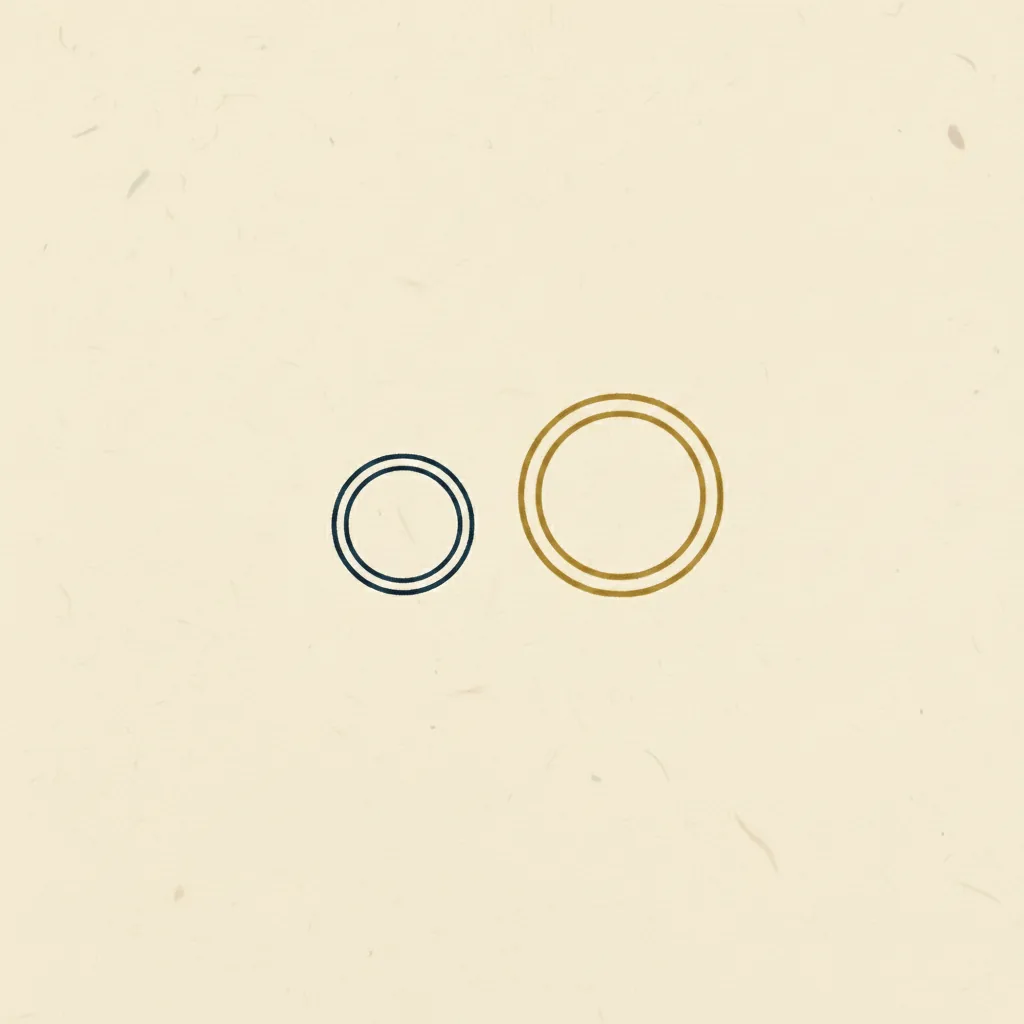
Run it on the pair above. The 8x36 monocular gives 36 divided by 8, which is 4.5mm. The 8x42 binocular gives 42 divided by 8, which is 5.25mm.
In bright daylight that gap is invisible, because Nikon notes the human pupil opens only about 2mm in daylight and both optics are delivering more than your eye can use. At dusk it’s a different story, because that same guide puts the dark adapted pupil at about 7mm. Once your pupil is wider than the beam arriving at it, the extra width is doing nothing and you’re looking at a dimmer picture than you could be.
So the monocular’s real optical cost is low light, and it’s a consequence of the smaller front lens rather than the single barrel. A monocular with a 42mm objective would close that gap and stop being pocketable, which is the whole point of the category. If those two numbers are new to you, they’re worth ten minutes: the number on the box.
Price is not the automatic win people expect
The intuition is that half the barrels means half the price. It doesn’t work out that way, and here’s why: monoculars are a small category, and the good ones are built as premium compact optics rather than as budget versions of anything. Meanwhile binoculars are the highest volume product in this whole market, so the competition at the entry level is fierce and the value there is genuinely remarkable.
The result is that a well made monocular often costs about what a decent entry level binocular costs. It’s still cheaper than the equivalent binocular from the same line, which is the comparison that matters if you’ve already decided on a tier. But if your question is “what’s the most optic for eighty dollars,” the answer is usually a binocular. I’ve worked that tier through on best binoculars for the money.
The thermal ones on that search page are a different animal
If you go looking for monoculars you’ll immediately run into thermal and night vision units, and they’re worth a paragraph so you don’t buy the wrong category by accident.
Those are electronic devices. They have a sensor and a screen, and what reaches your eye is a picture the device has generated rather than light from the thing you’re pointed at. They’re overwhelmingly built as single eyepiece units, and they cost multiples of what a daylight monocular costs. If you want to see a warm animal in the dark, that’s the product. If you want to see a bird in a tree on a Sunday afternoon, it isn’t, and the specifications don’t compare on any axis. Two products sharing a word is all that’s going on here.
Glasses, focus knobs, and the small stuff that decides it
Eye relief is the distance your eye can sit back from the eyepiece and still see the full field, and if you wear glasses it’s the specification that decides whether an optic is usable for you at all. The two above are close: 18.0mm on the Solo monocular against 17.0mm on the Diamondback HD binocular. Both are comfortable numbers, so this isn’t a category level advantage either way, but it does vary a great deal model to model and it’s worth checking before you buy. The full version of that is over on binoculars for glasses wearers.
Focusing is a genuine difference in daily use that specifications don’t capture. A binocular has a central wheel your index finger falls onto without moving your grip. A monocular usually focuses by turning a ring on the body, which means the hand holding the tube is also the hand adjusting it, and steadiness suffers exactly while you’re trying to get sharp. Look for one where the focus is reachable without regripping.
One more small thing in the monocular’s favour: at 4.9 inches long it’s small enough that bracing it against a fencepost, a door frame or your own cheekbone is easy, and bracing beats any amount of steady hands.
The case nobody frames as a case: buying one as your second optic
Everything above treats this as a choice between two things, which is how the question gets asked. But there’s a reader for whom it isn’t a choice at all, and it’s probably the largest group of satisfied monocular owners: people who already own binoculars.
If the binoculars are good and they live on a harness for the days you go out on purpose, a monocular isn’t competing with them. It’s the one that lives in a jacket pocket, a glovebox, a boat bag or a daypack lid, for all the times you weren’t planning to look at anything. At 9.7 ounces it costs you nothing to have along, and the honest comparison isn’t monocular against binocular, it’s monocular against nothing, because the binoculars are at home.
Framed that way the objections mostly evaporate. Eye fatigue after twenty minutes doesn’t matter when you’re looking for forty seconds at a hawk on a pole. Flattened depth doesn’t matter when you just want to know whether that’s a heron. And the cost question changes shape too, because you’re not buying an optic, you’re buying the ability to look at something on an ordinary Tuesday.
If you do buy one, here’s what to actually check
Four things, and only one of them is on the specification sheet.
Take the 8x, not a bigger number. The higher powers get shaky in one hand and their narrower field makes finding anything a chore. This is the same advice Audubon gives for binoculars, where they strongly recommend six, seven or eight times magnification, and the reasoning gets stronger rather than weaker when you’re holding the thing one handed.
Take the largest front lens that still fits your pocket. That’s where the light comes from, and it’s the specification the pocketable models are most tempted to shave.
Check the eye relief if you wear glasses, and check that the eyecup twists or folds down.
Look at where the focus control sits. If the focus ring is out on the body, the hand holding the tube is also the hand turning it, and steadiness suffers at exactly the moment you’re trying to get sharp. A control your fingers reach without regripping is worth more than any number in the specifications.
Questions people actually ask
Is a monocular as good as binoculars?
Optically, yes, and that’s the surprise. A comparable 8x monocular delivers the same magnification and the same field of view as the 8x binocular from the same line. What it doesn’t deliver is two eyed comfort over a long session, depth perception, or quite as much light if its front lens is smaller. For short repeated looks it’s genuinely as good. For an hour of watching it isn’t.
Why do my eyes get tired using a monocular?
Because one eye is working while the other is either squeezed shut or being ignored, and both of those cost effort. It usually shows up after ten or fifteen minutes rather than immediately. Keeping the unused eye relaxed and open, rather than clamped shut, helps more than people expect.
Are monoculars good for birding?
For casual and packable birding, yes. For a dedicated morning out, binoculars win on comfort and on picking a bird out of cluttered branches. That question deserves its own answer and I’ve given it one: monocular for bird watching.
Can you use a monocular with glasses?
Yes, subject to the same eye relief rule as binoculars. You want a generous eye relief figure and an eyecup that folds or twists down so your lens can sit close. The Vortex Solo 8x36 publishes 18.0mm, which is comfortable, but the number varies widely across models so check it rather than assuming.
Is a monocular cheaper than binoculars?
Cheaper than the equivalent binocular from the same line, yes. Cheaper than the best binocular available at your budget, often not, because the entry level binocular market is far more competitive. If price is the whole question, compare specific models rather than categories.
What about a monocular for stargazing?
Different question with a different answer, because at night the size of the front lens dominates everything and a pocketable objective is working against you. I’ve covered it separately at best monocular for stargazing.
What I’d tell somebody deciding at the counter
Buy the binoculars, unless one of four things is true. You know yourself and you know the binoculars will stay home. You need a hand free. Your budget only reaches an entry level monocular from a maker you trust. Or you’re working with one eye, in which case the monocular is simply the correct tool and the second barrel would have been dead weight.
If any of those is you, buy the monocular without feeling like you’ve settled, because you haven’t given up magnification or field of view. Get an 8x rather than a bigger number, get the largest front lens that still fits your pocket, and check the eye relief if you wear glasses. The one this page keeps coming back to is the Vortex Solo 8x36 at about $120, and its two-barrel sibling from the same line is the Vortex Diamondback HD 8x42 at about $240.
And if you’re standing there because you want to look at more than one kind of thing, that’s a different question again, which I’ve worked through at telescope vs binoculars and binoculars vs spotting scope.
A few things you’re probably also wondering:
- Specifically about birding with one? See monocular for bird watching.
- Wondering what 8x36 and 8x42 actually mean? See the number on the box.
- Choosing between two binocular sizes instead? See 8x42 vs 10x42.
- Thinking about far more magnification than either? See spotting scope vs telescope.
Ray Ostrander
Ray spent three decades explaining the sky to twelve-year-olds and their parents, and every January, hearing which Christmas telescopes ended up in the closet. He doesn't own a wall of gear and won't pretend to. He reads everything, tells you what owners agree on, and flags what's just his judgment. His goal is simple: no more January closets.